The Complete Collection
Thirty-seven paintings.
One acquisition.
The collection is offered complete, and only complete. Both series, both Test paintings, the full fifty-year arc — the entire documented output of the innovation.
Integrity is the point: a single-owner archive with unbroken provenance from the artist’s hand, coherent enough to hang as a museum exhibition on day one. Whoever acquires this collection acquires something no future buyer can ever have — the debut. The first public exhibition of a verified 1972 innovation, staged however, wherever, and whenever its steward chooses.
Series I · 1972–1979
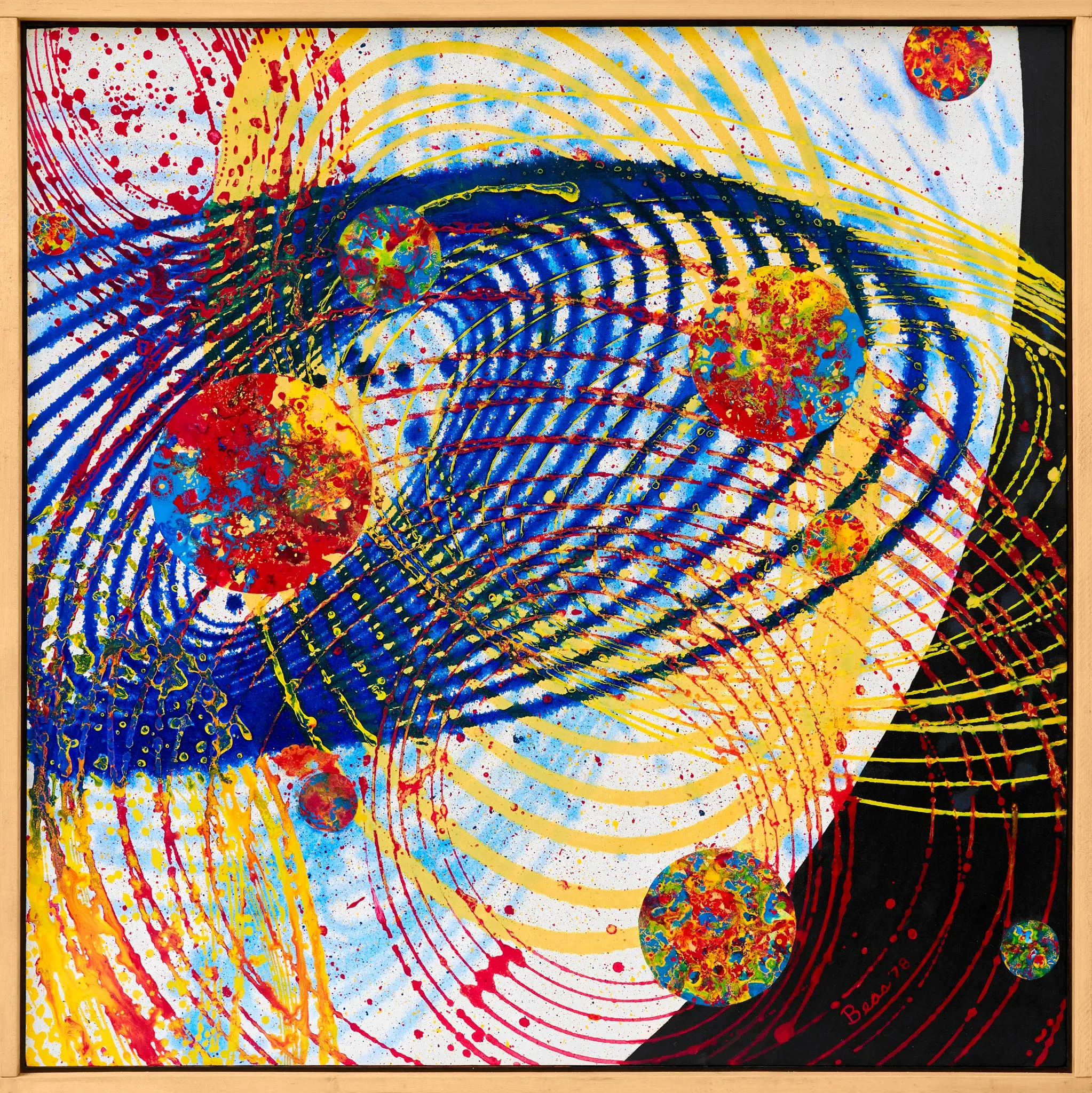
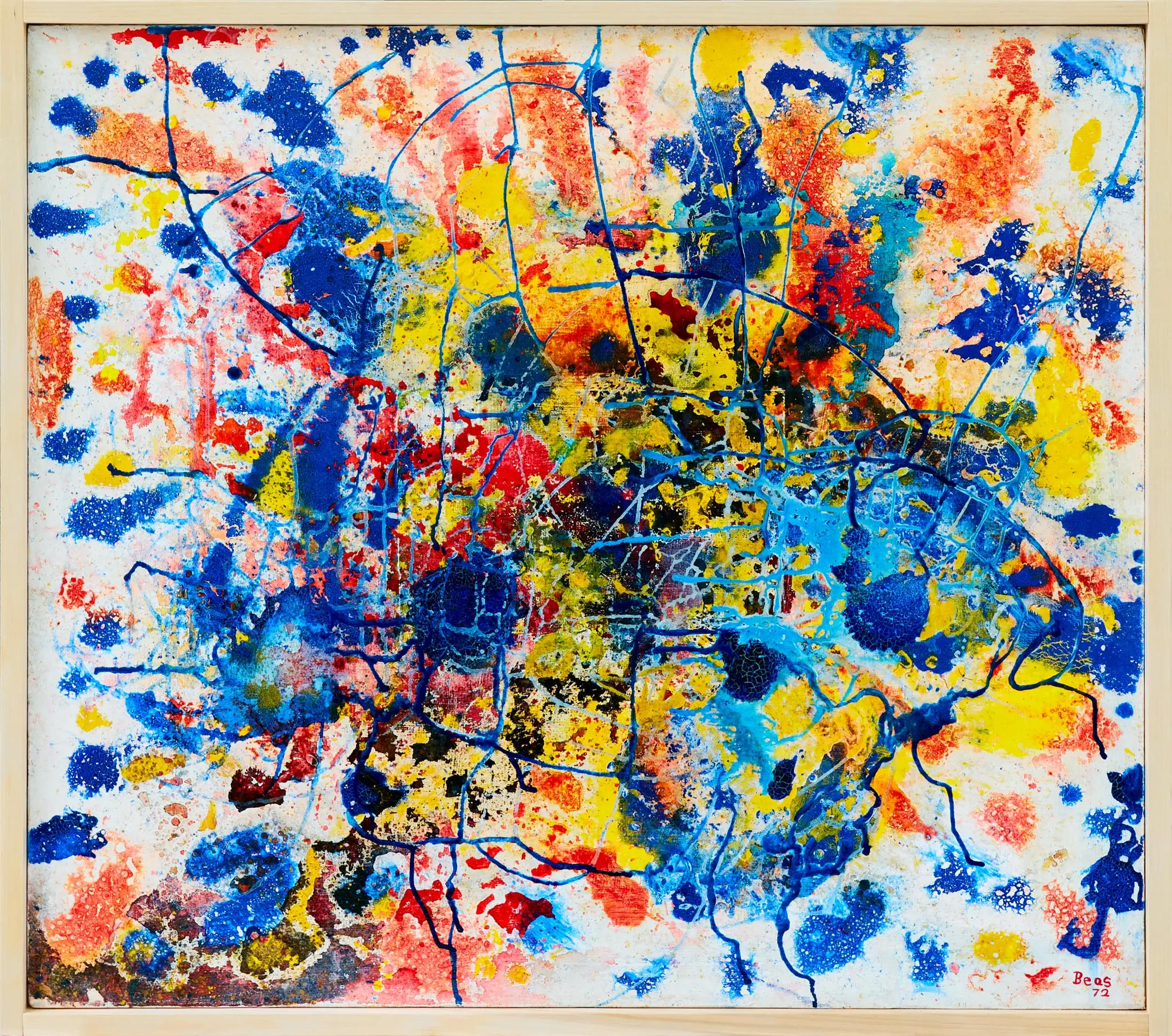
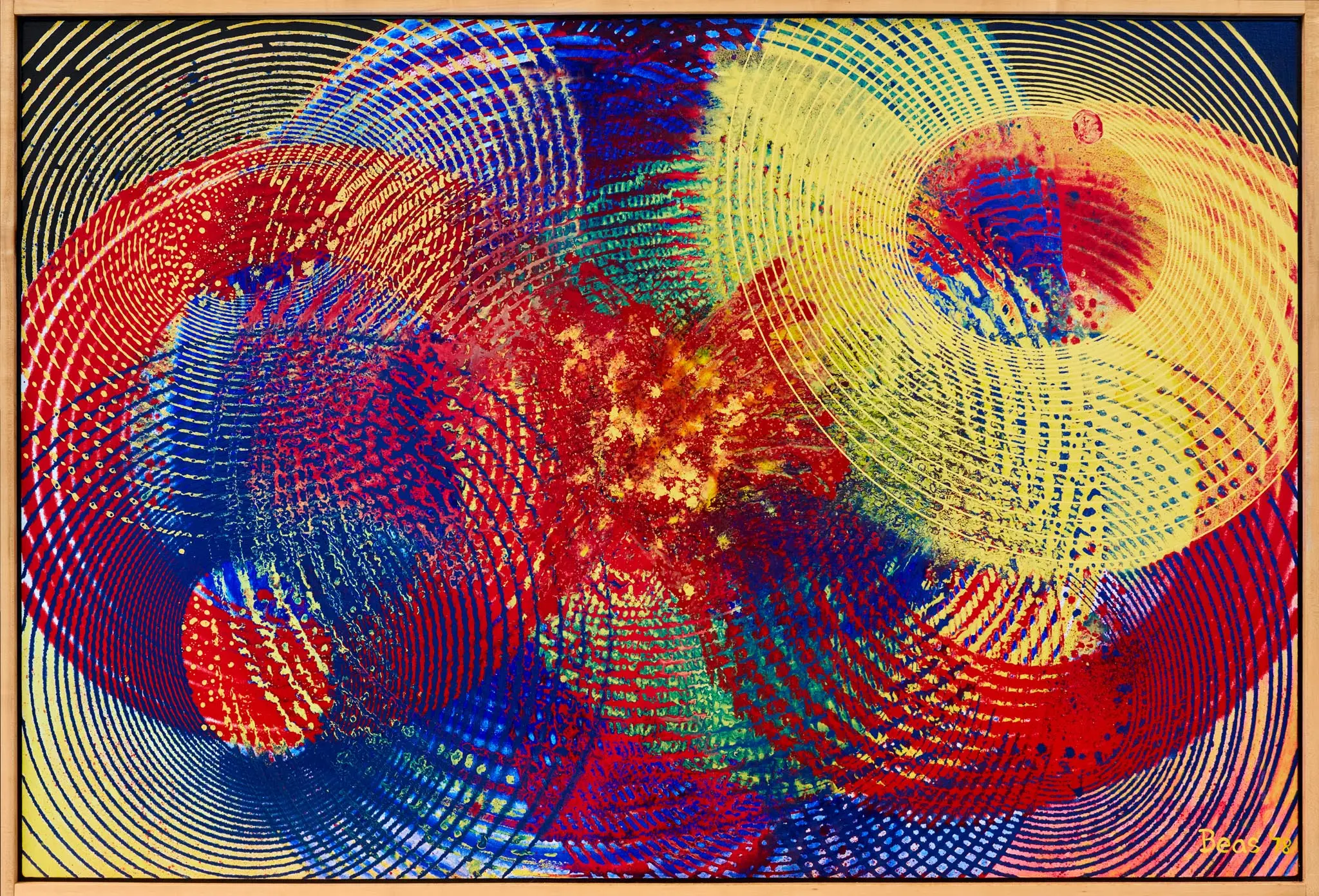
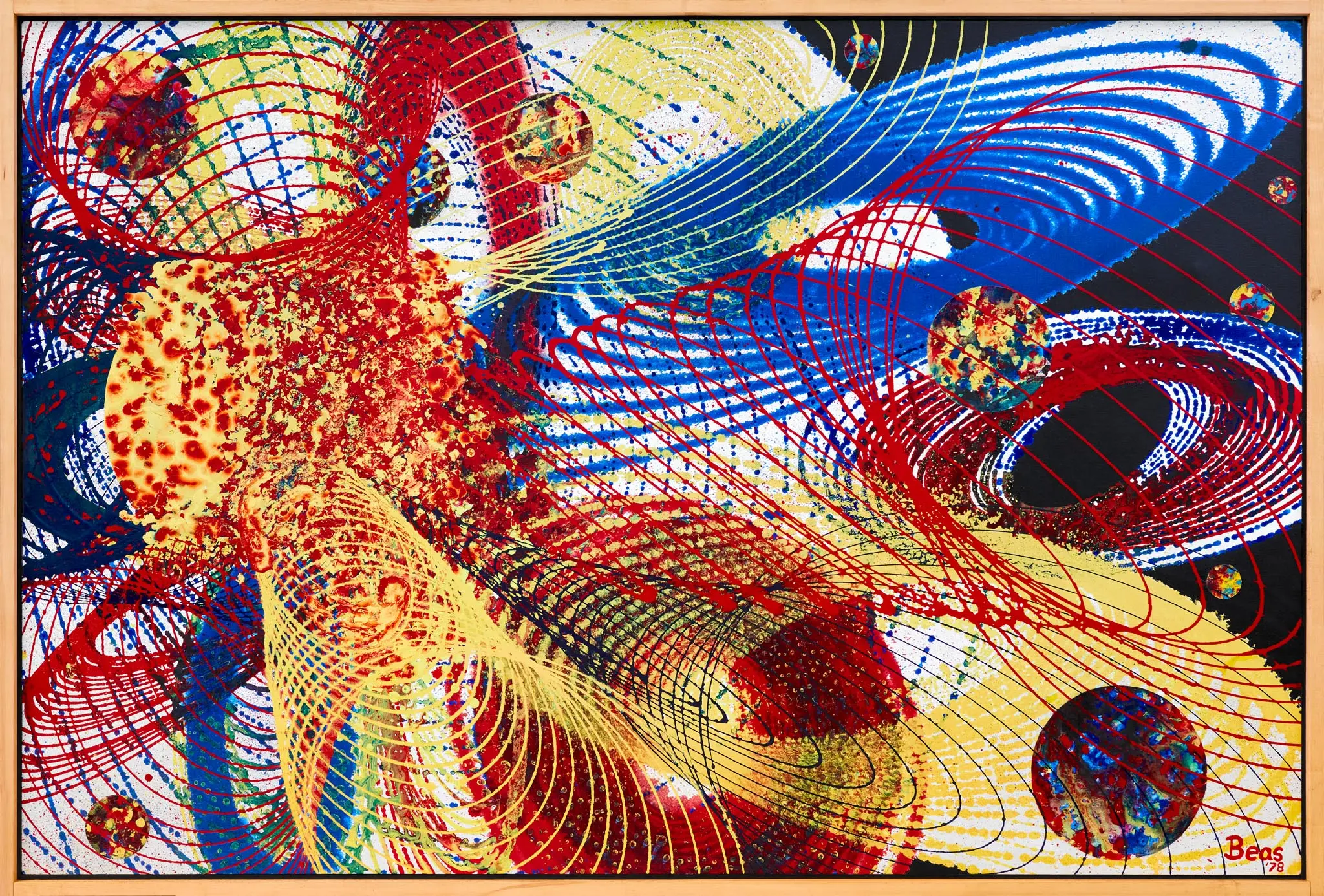
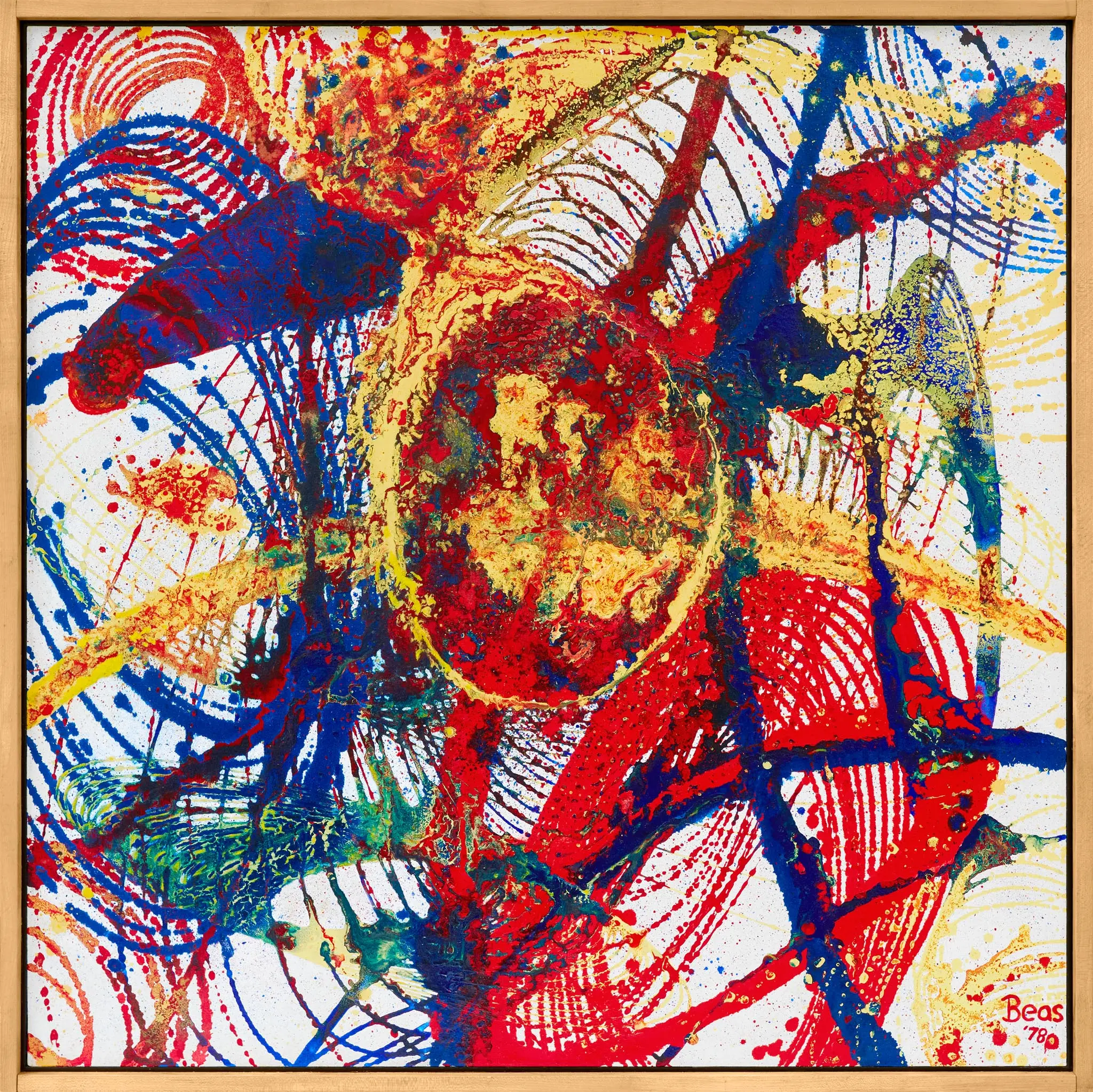
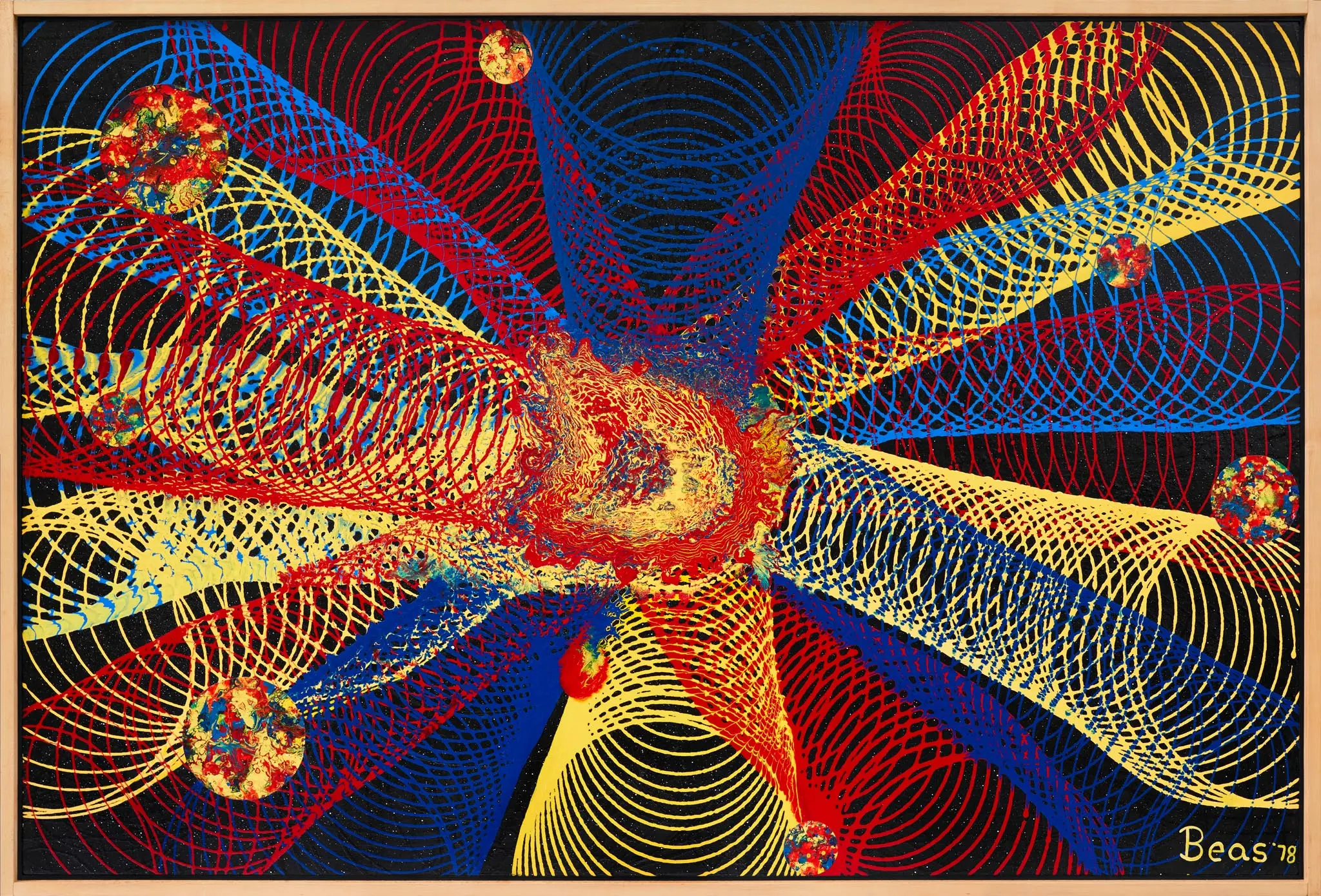
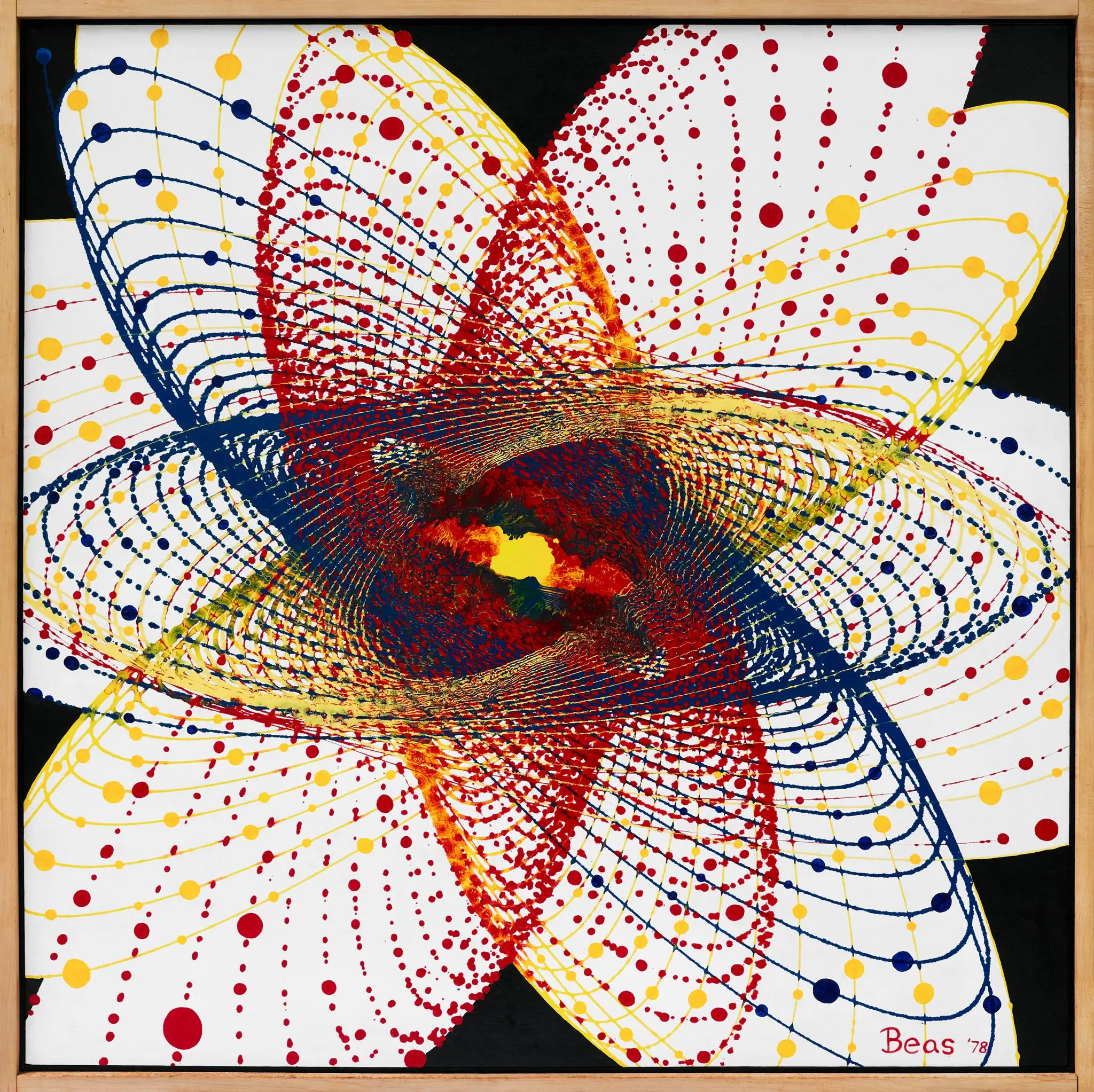
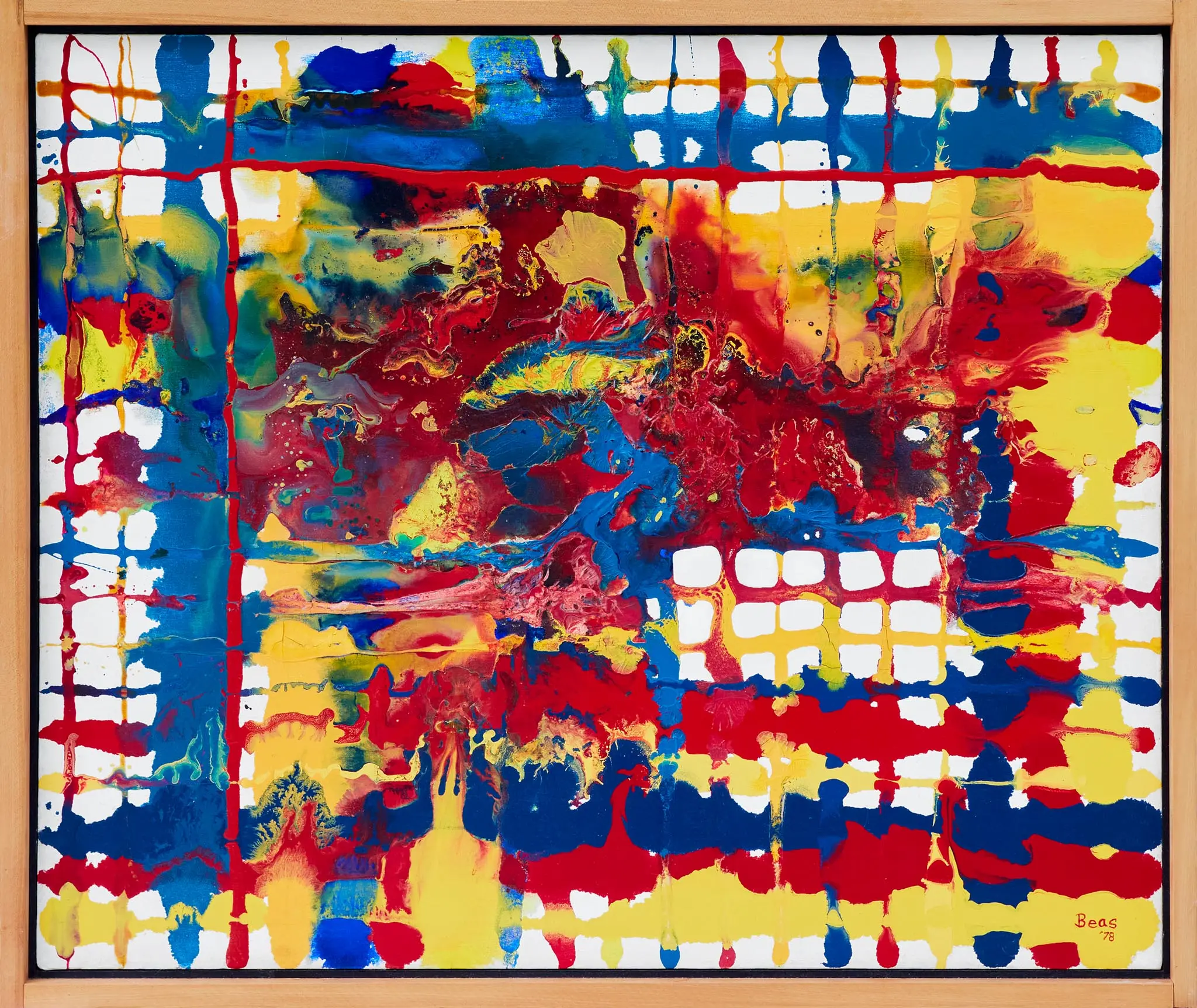
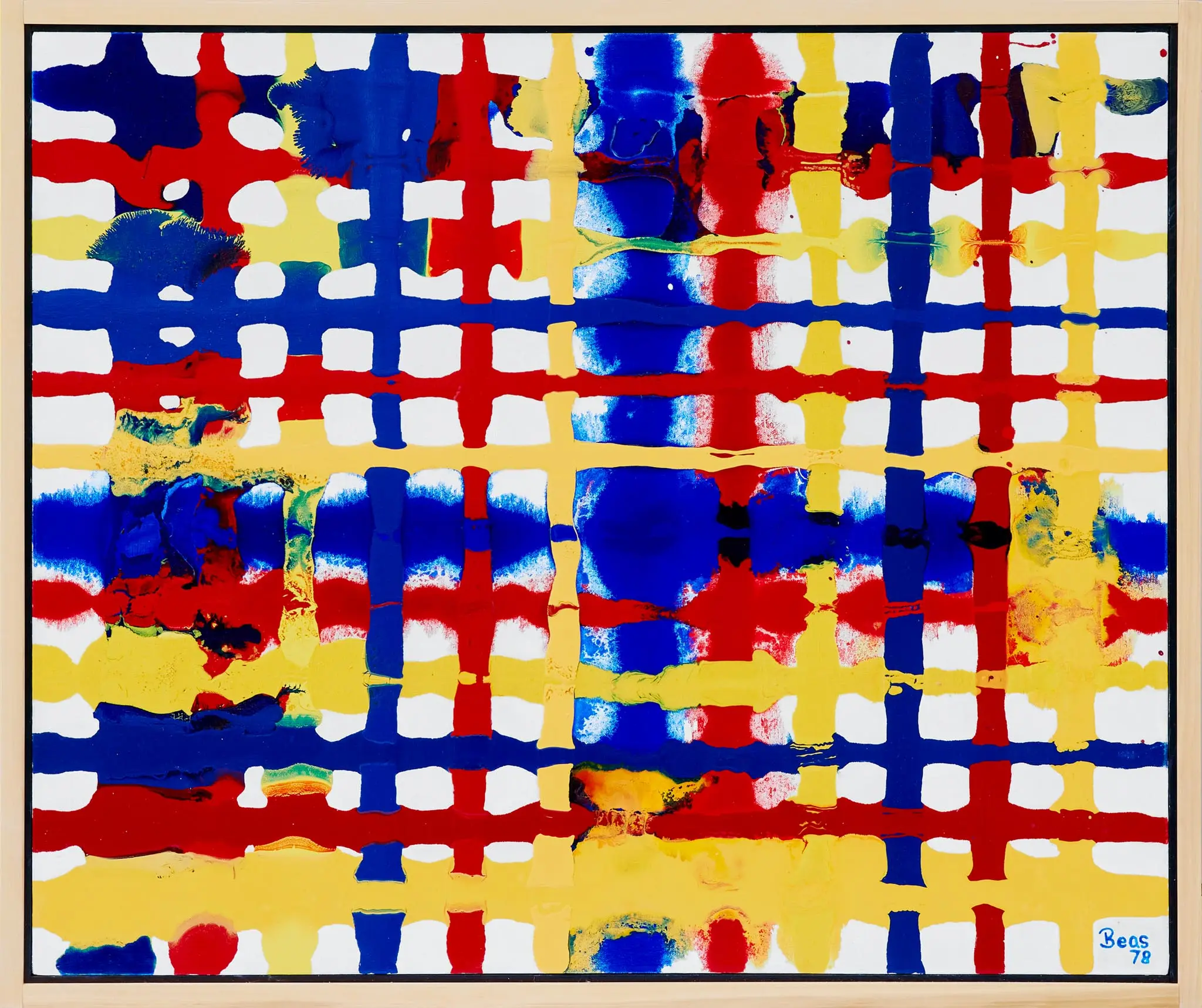
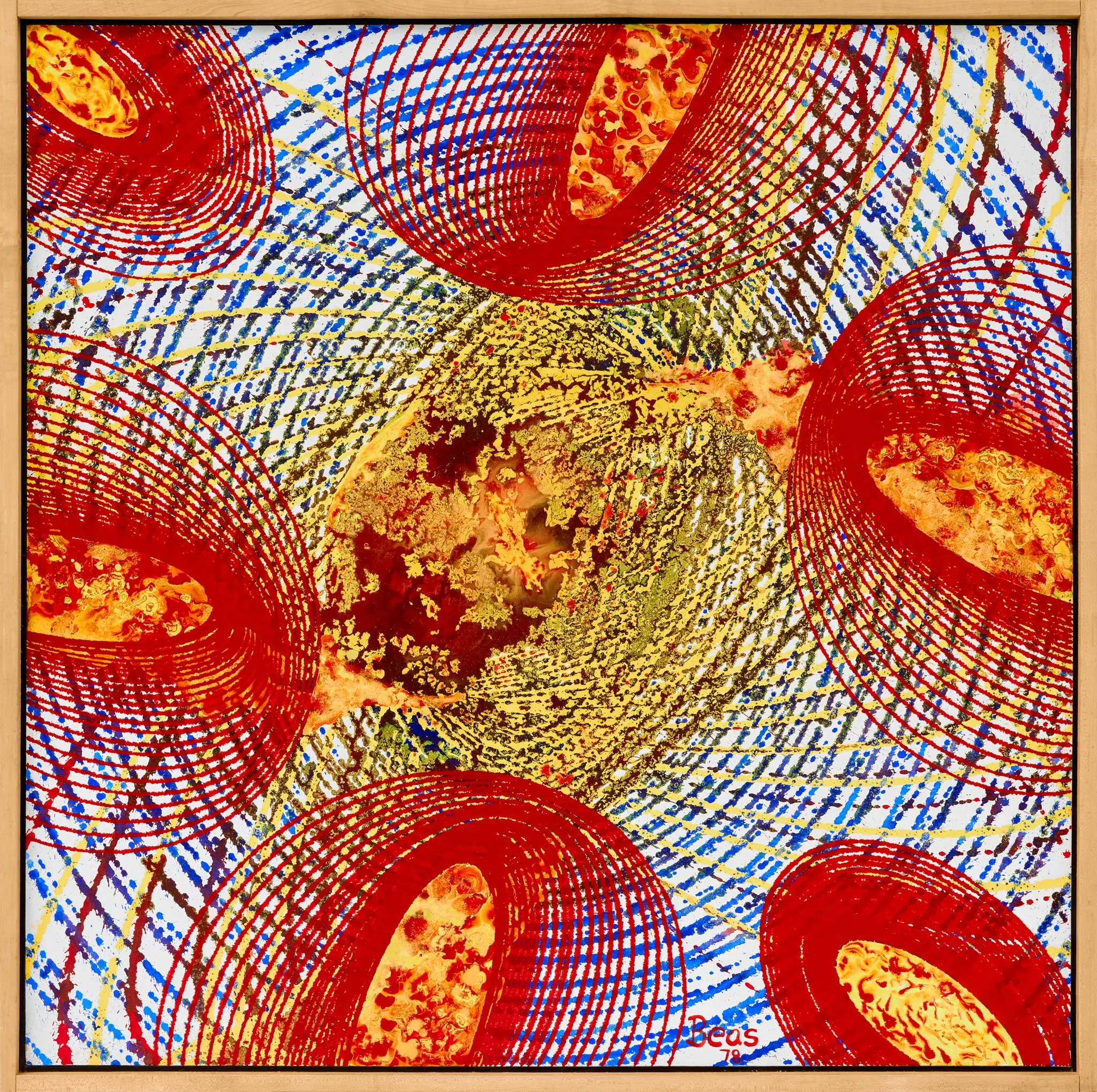
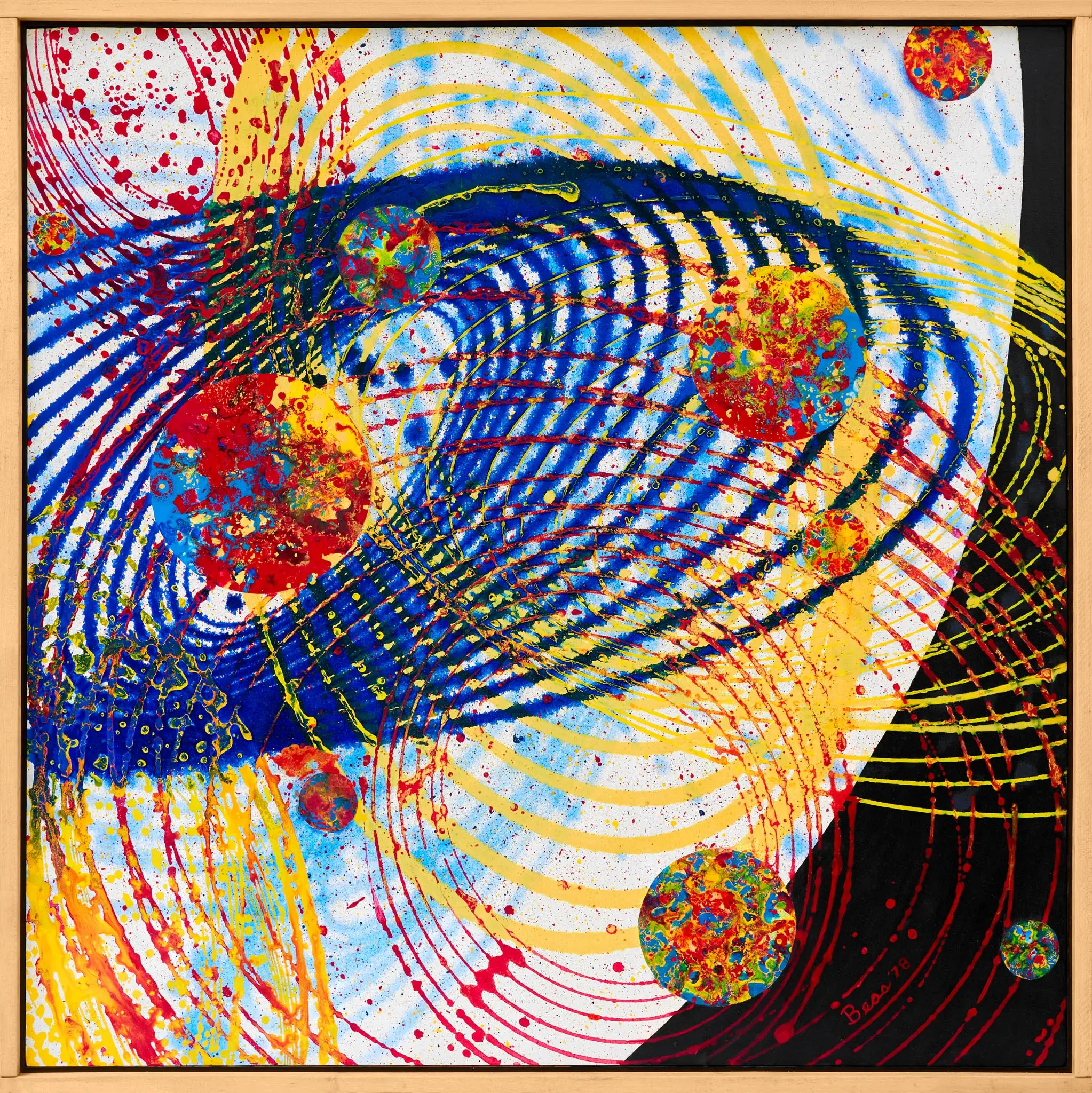
Big Bang — thirteen paintings.
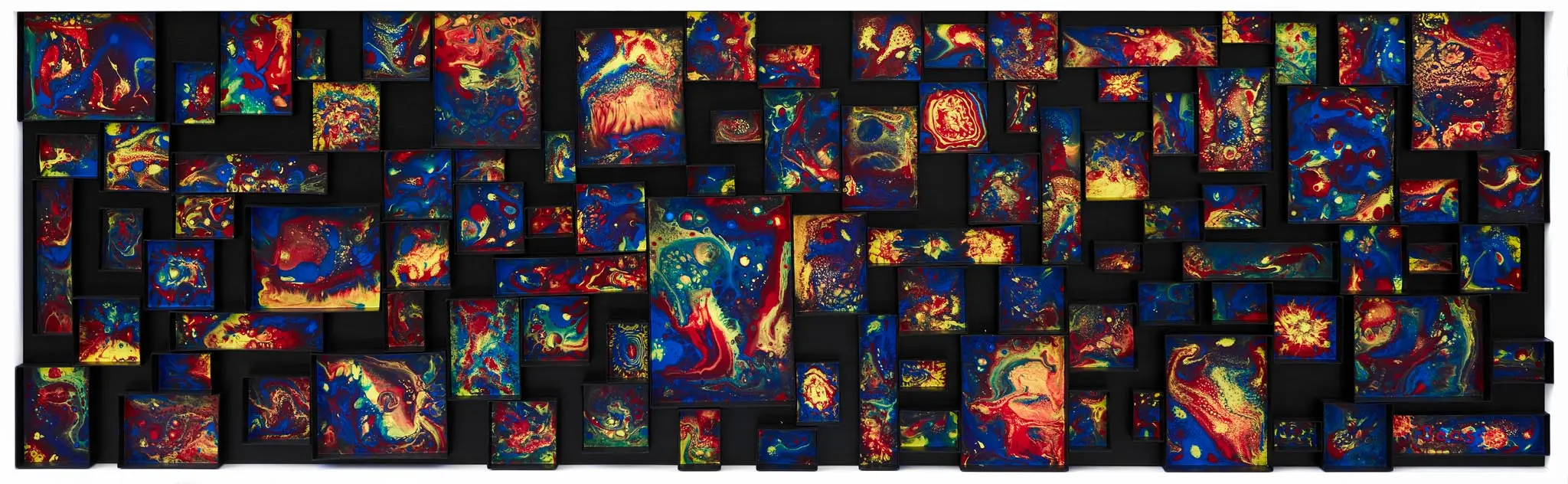
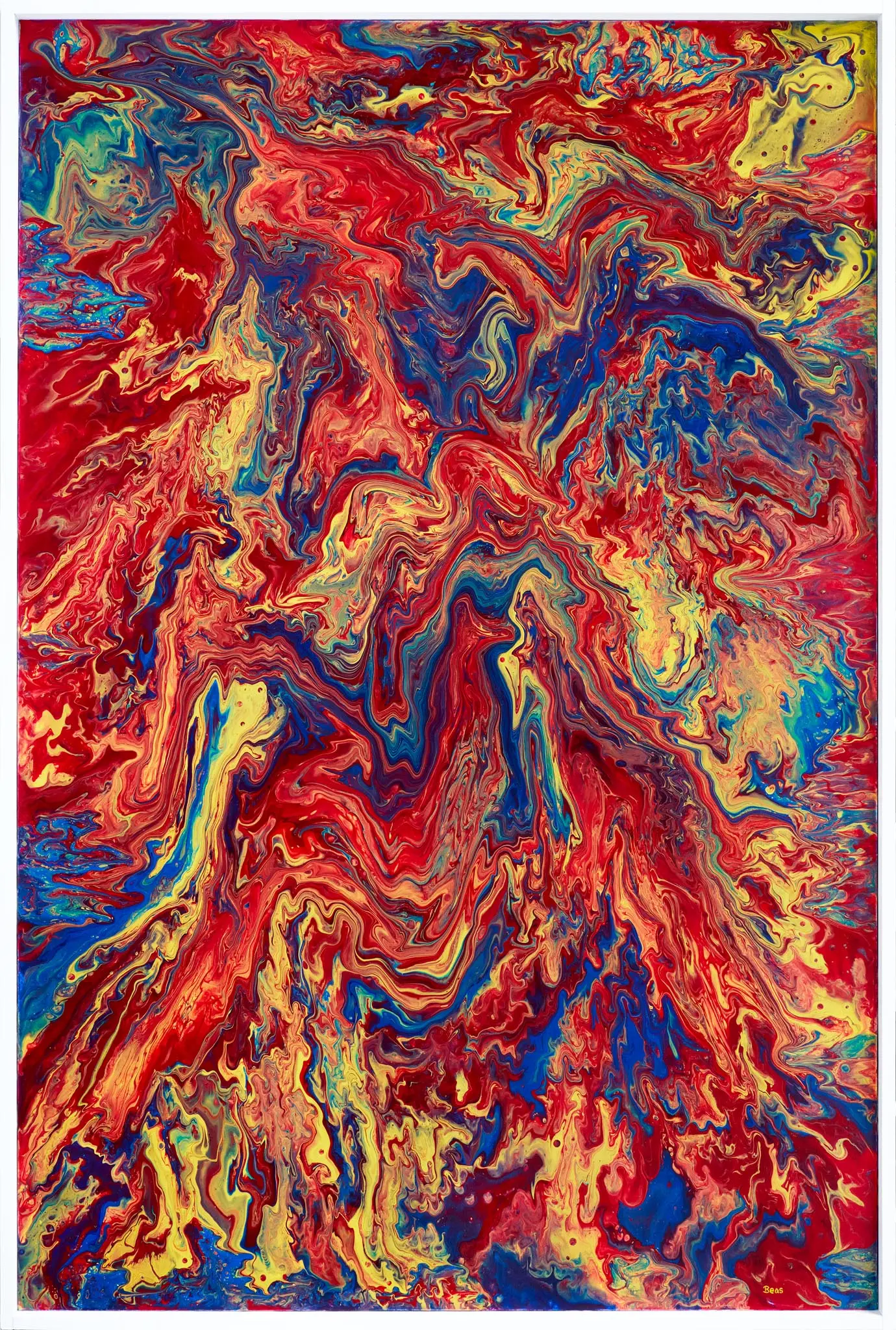
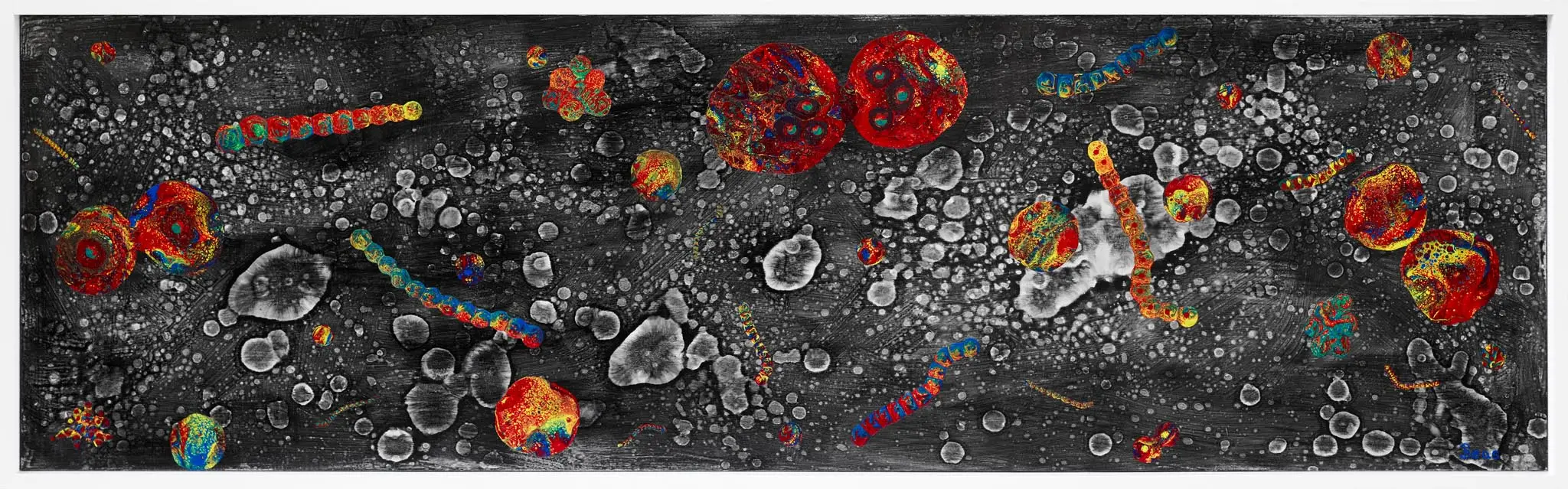
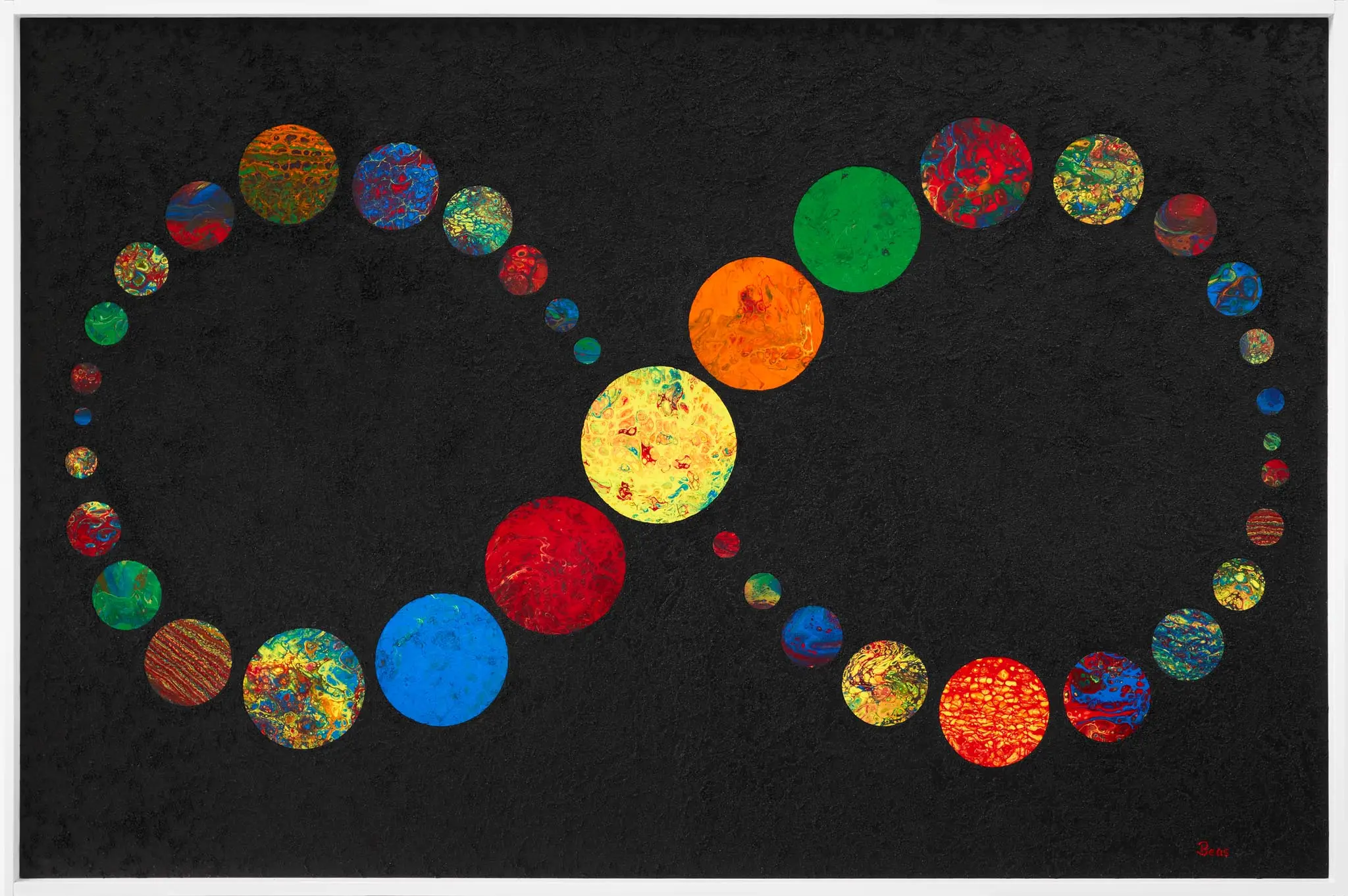
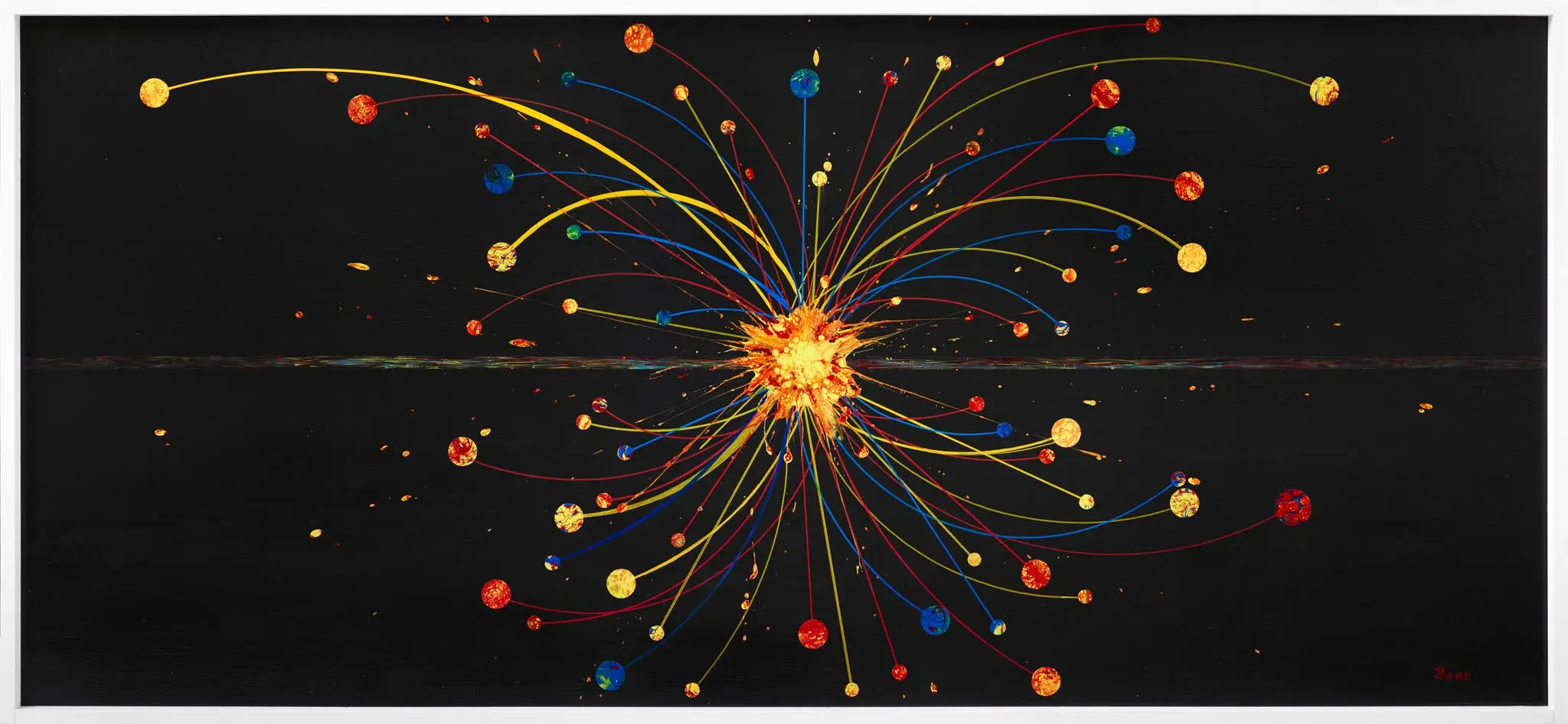
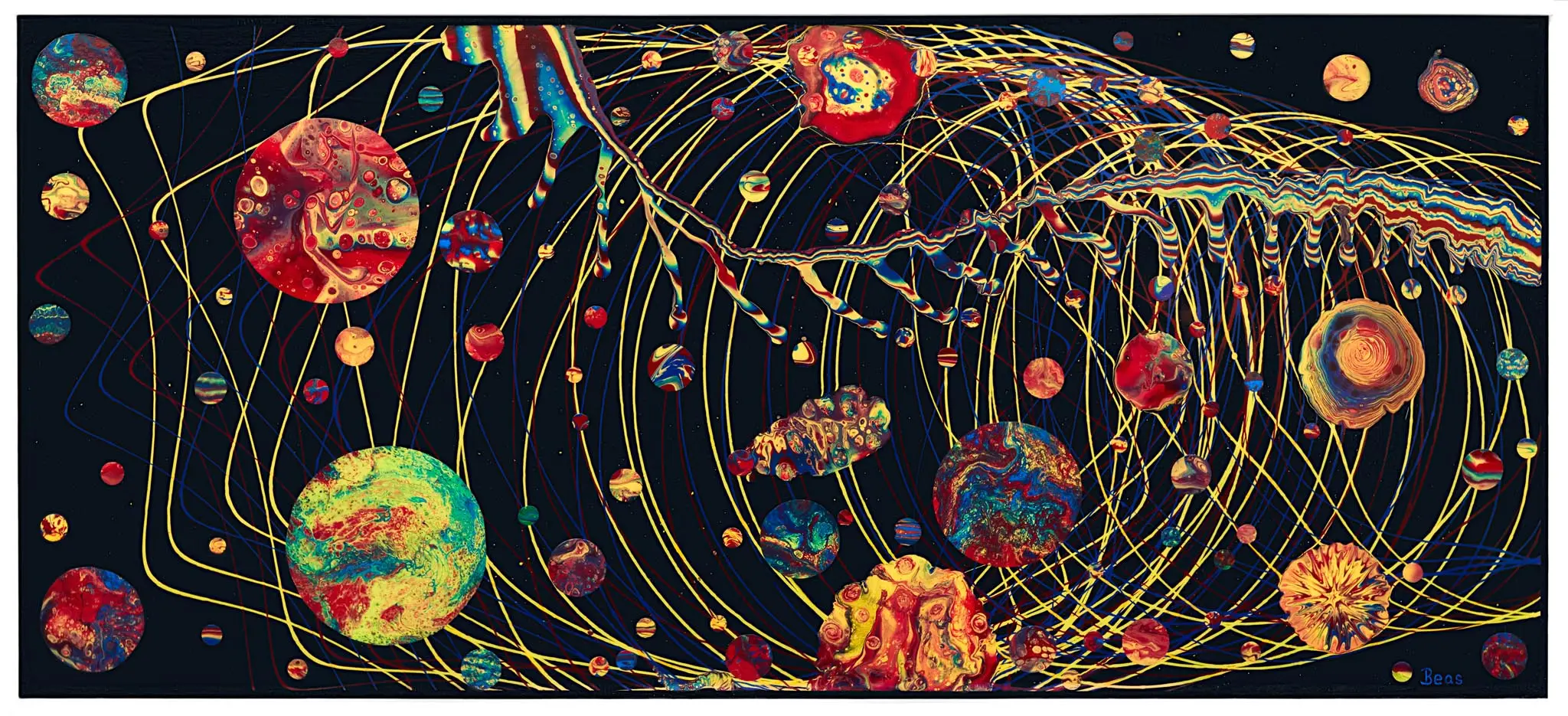
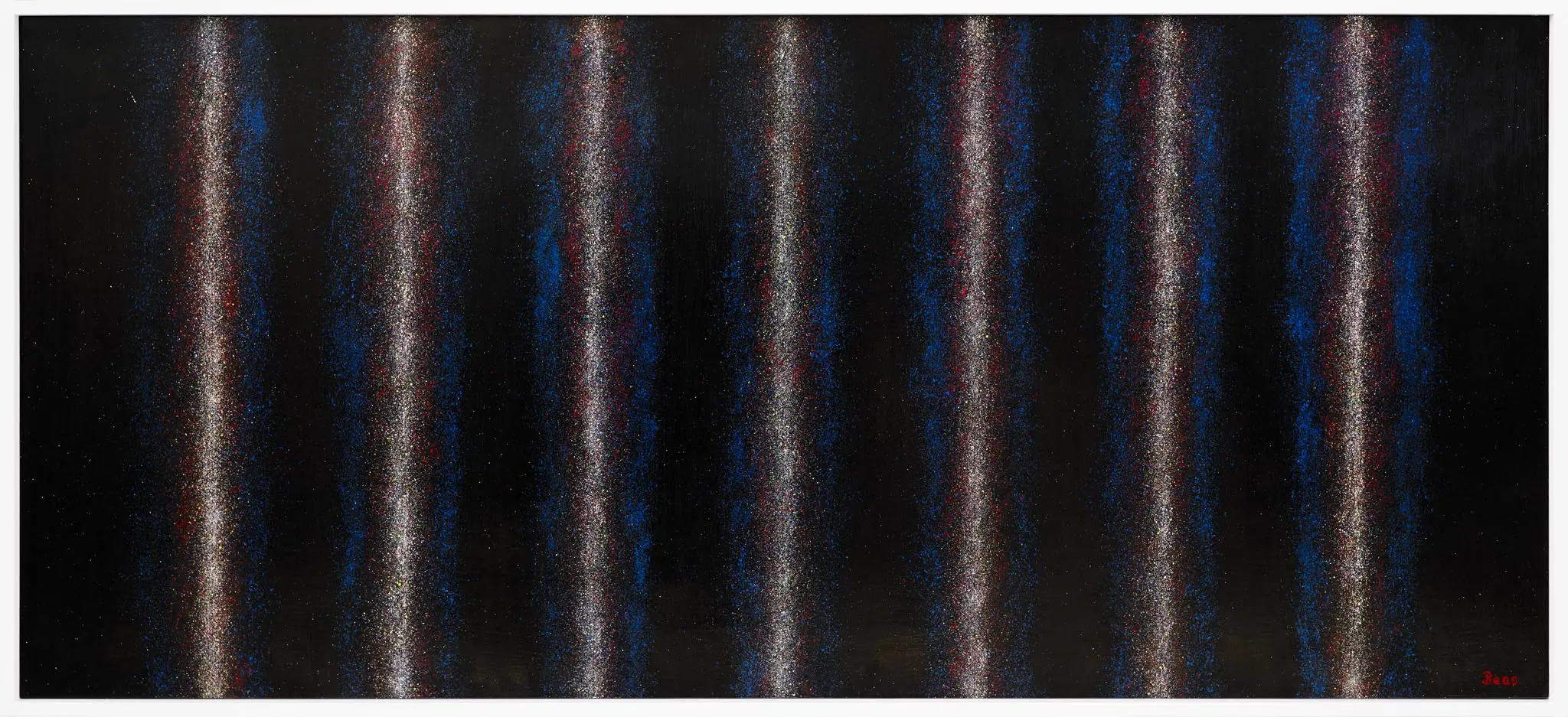
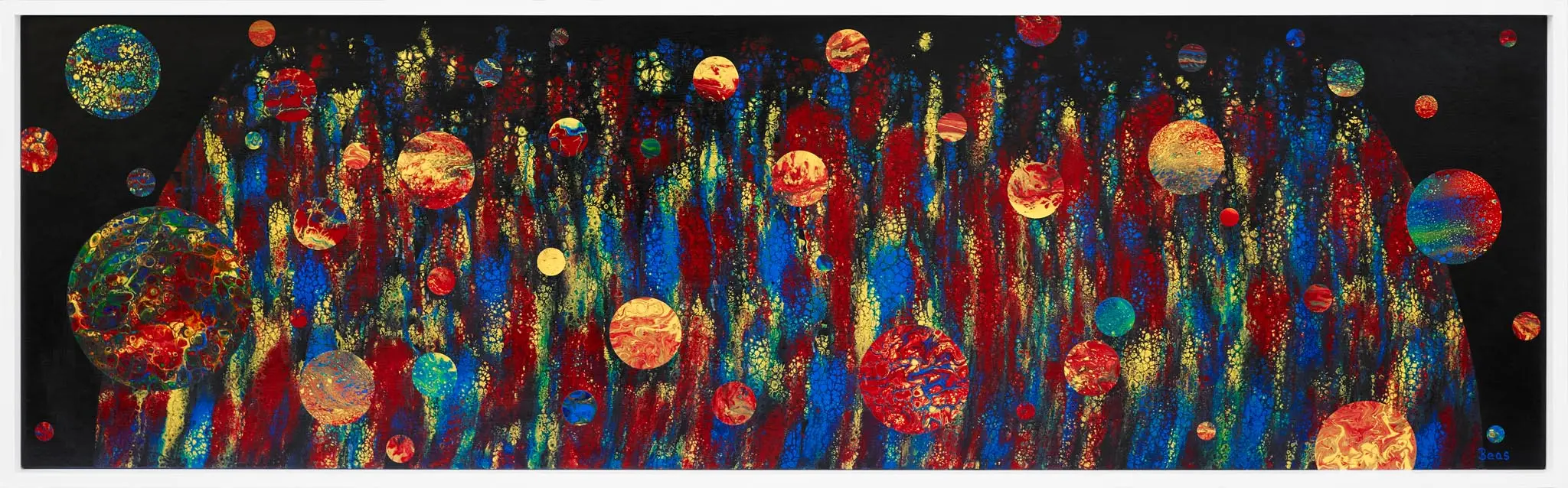
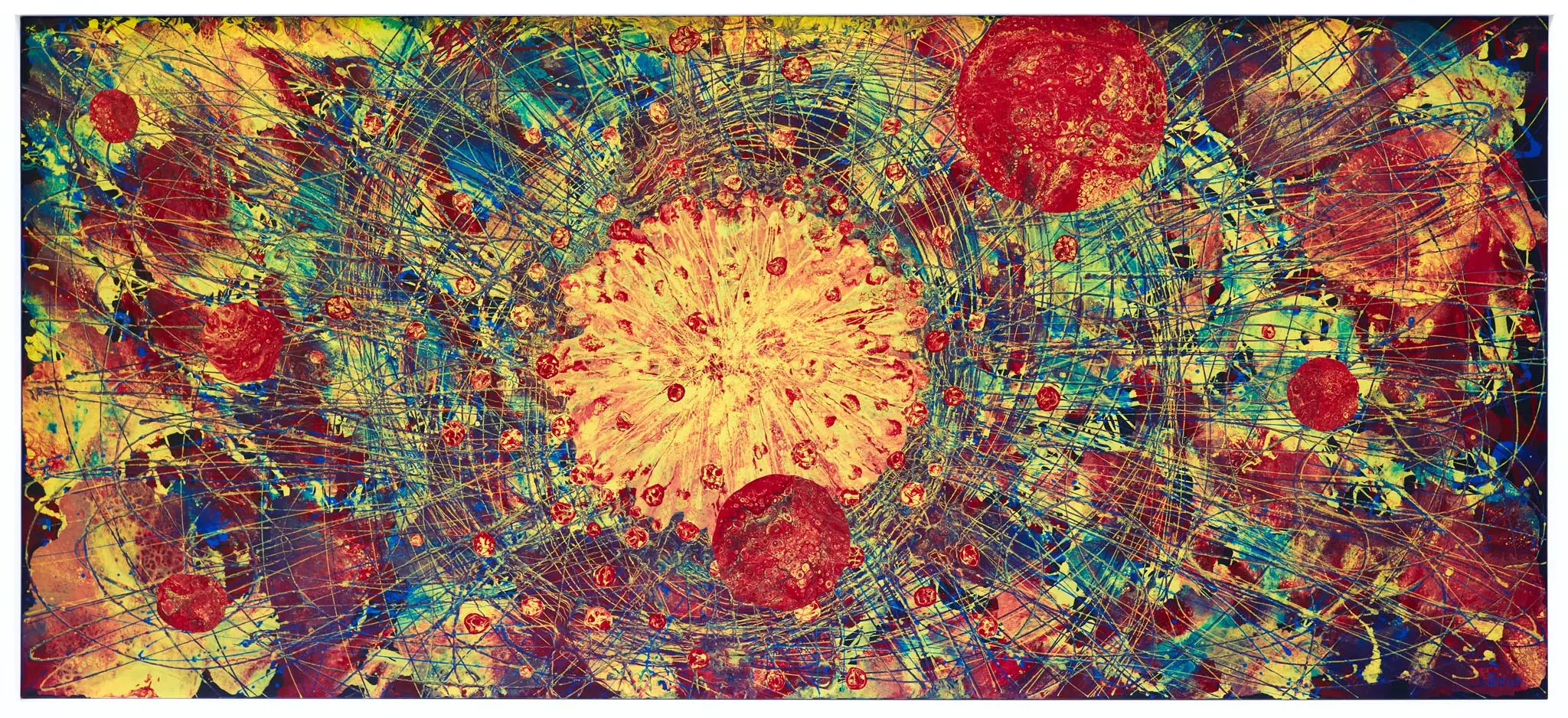
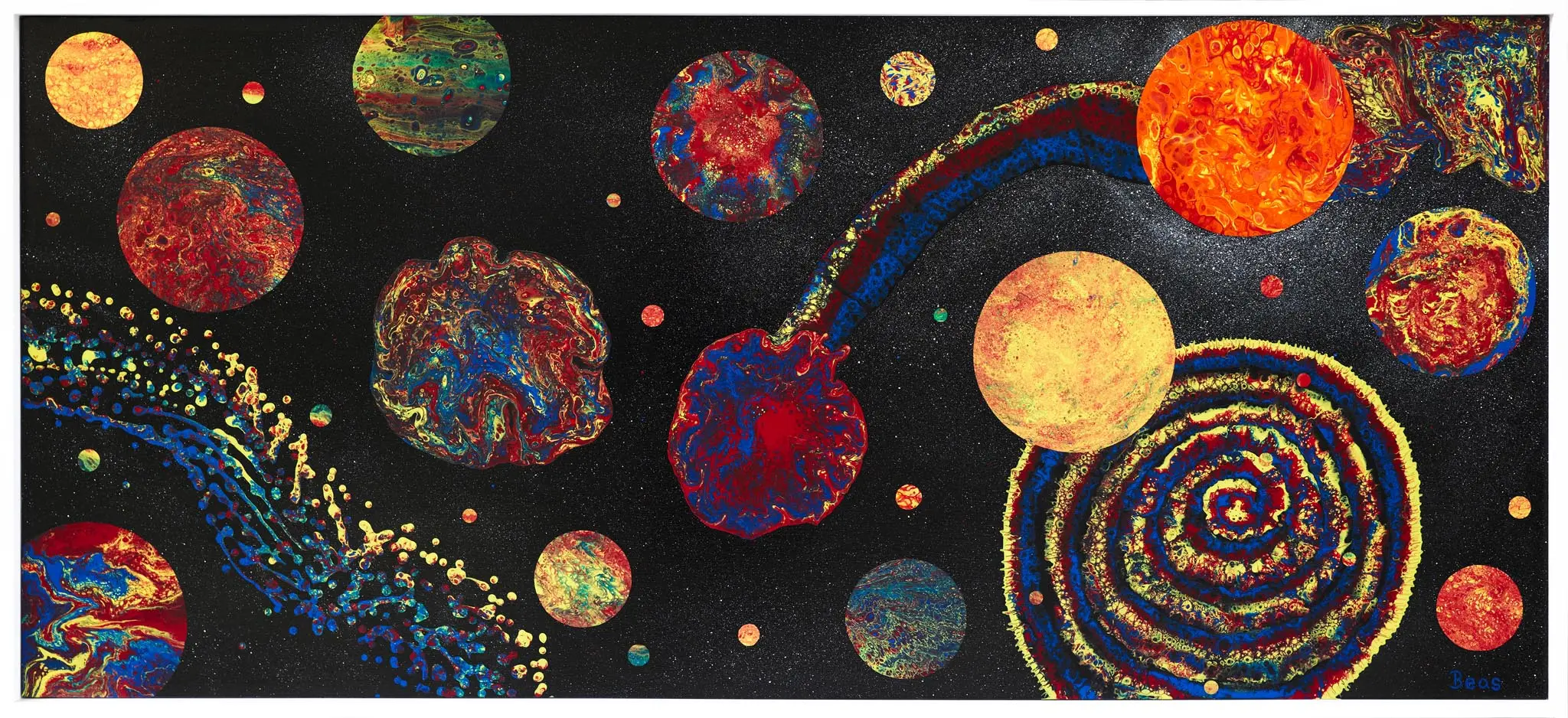
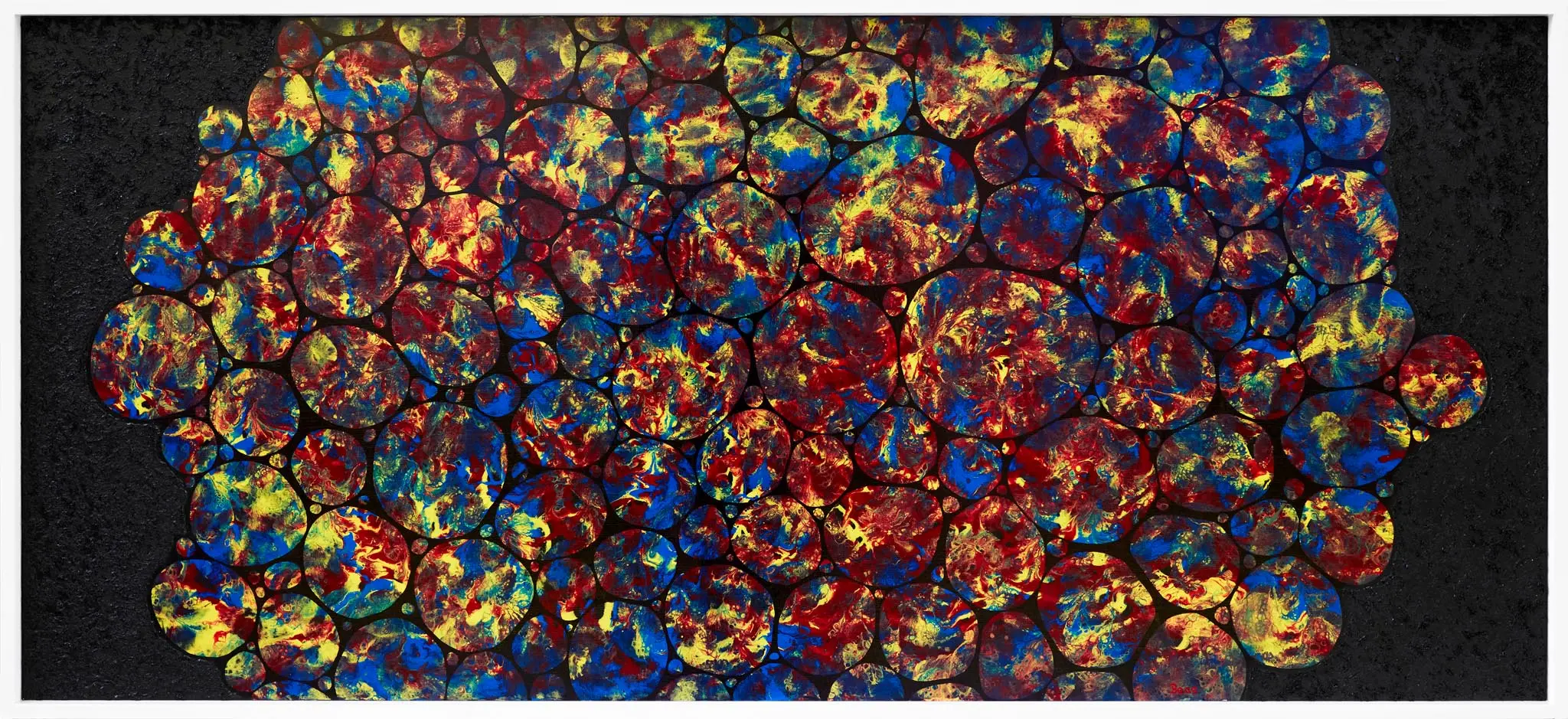
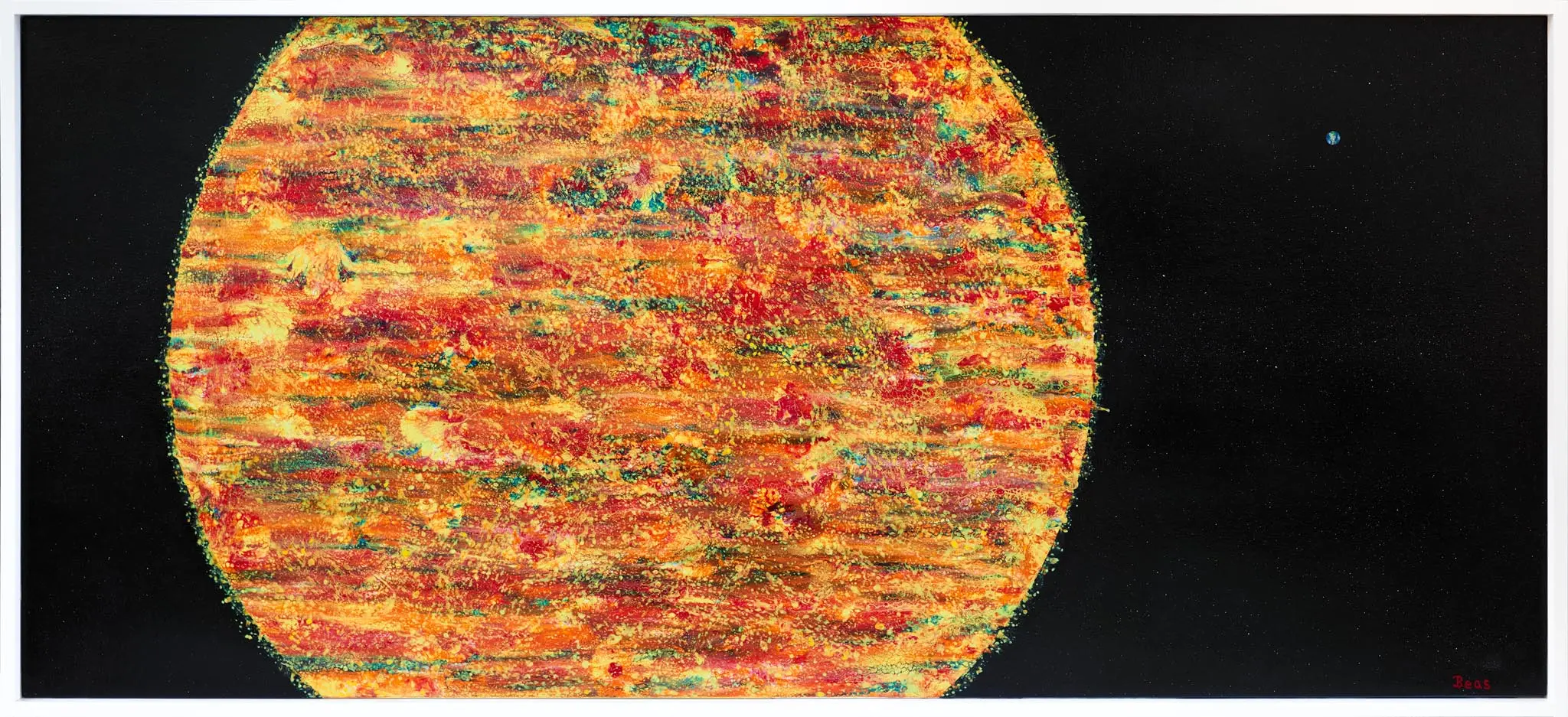
The first series states the theme: origins. Poured chemistry becomes nebulae and planetary surfaces; pendulum traces become orbits and expansion. Painted in the same decade cosmology itself was becoming precise science, by a painter running experiments of his own.
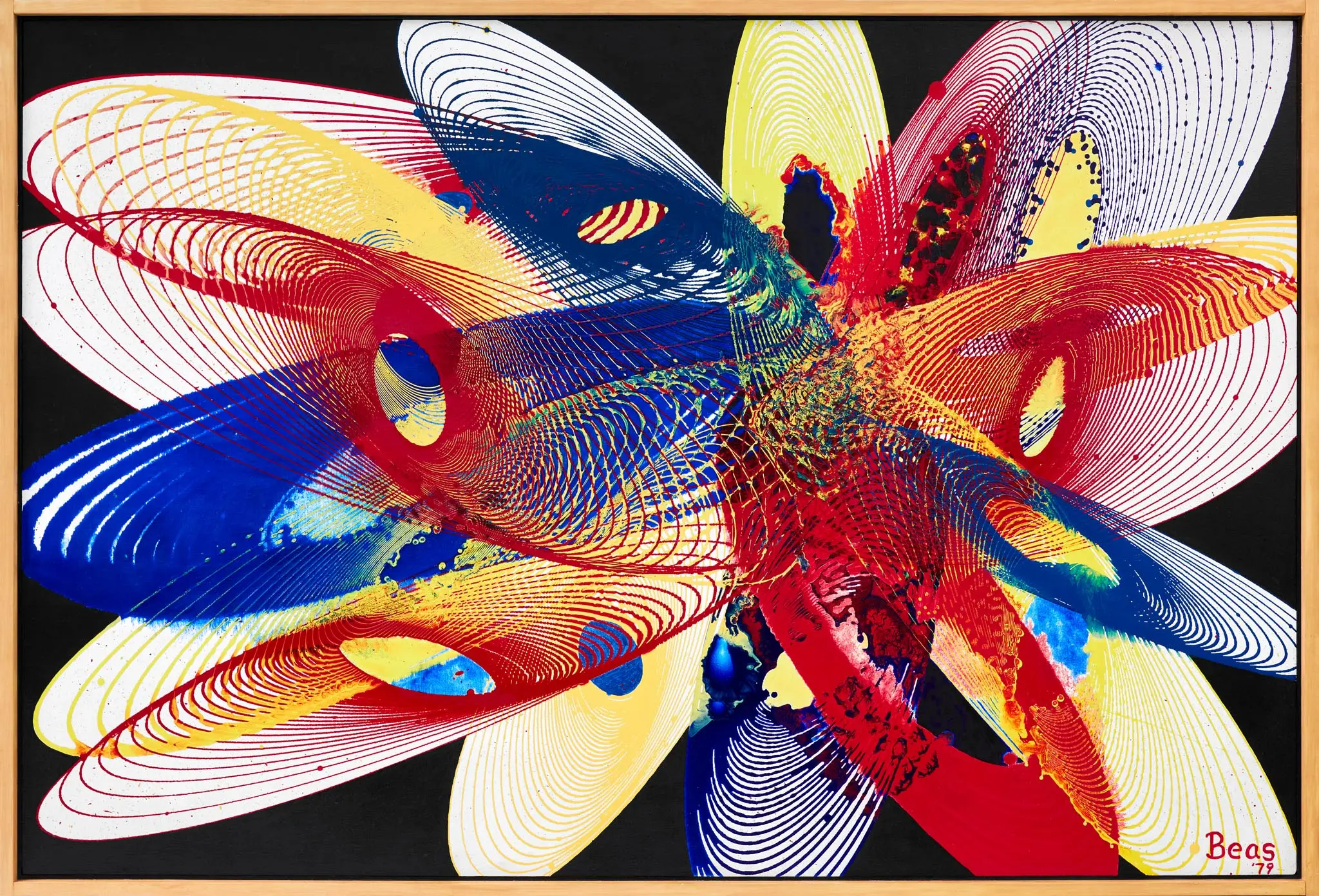
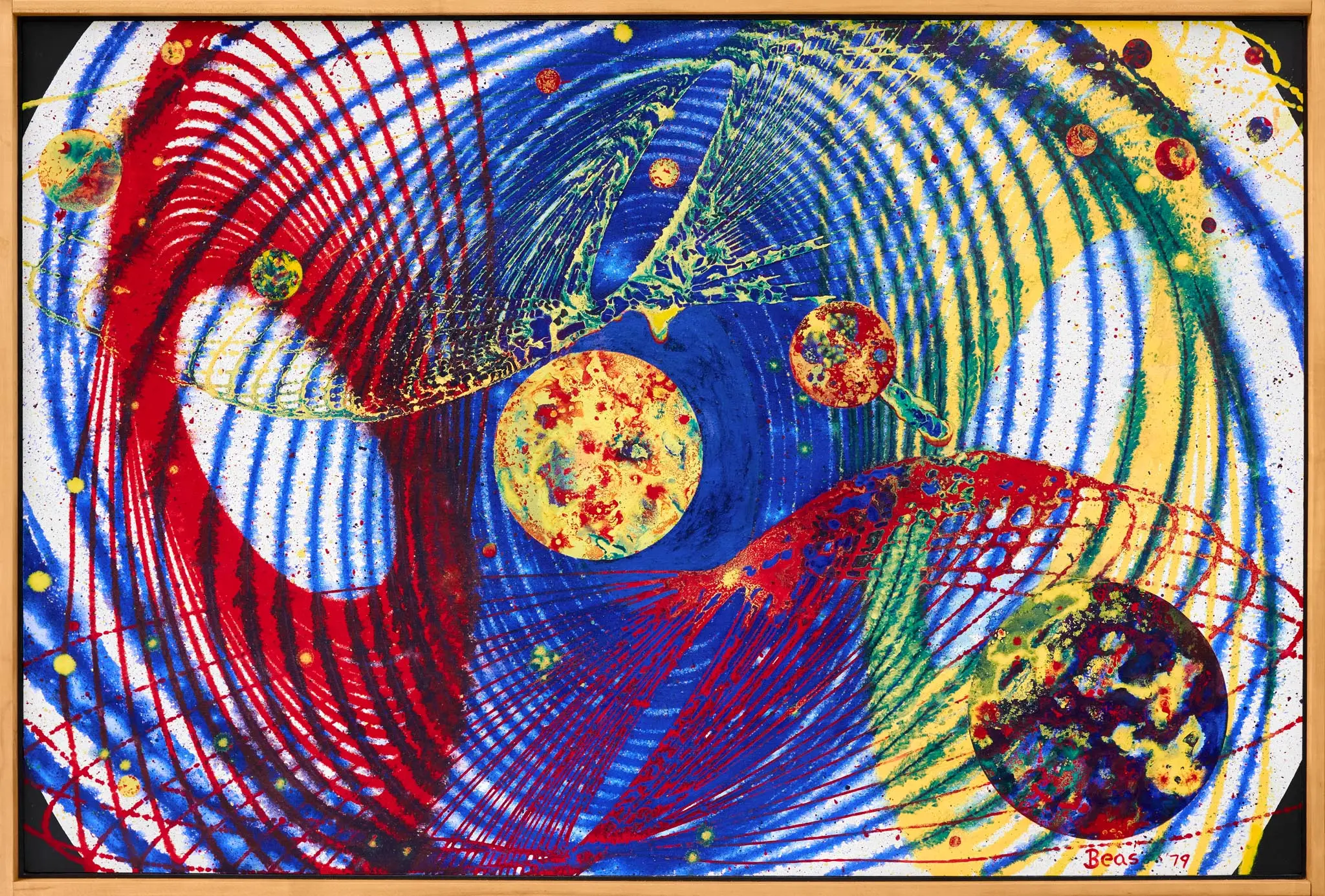
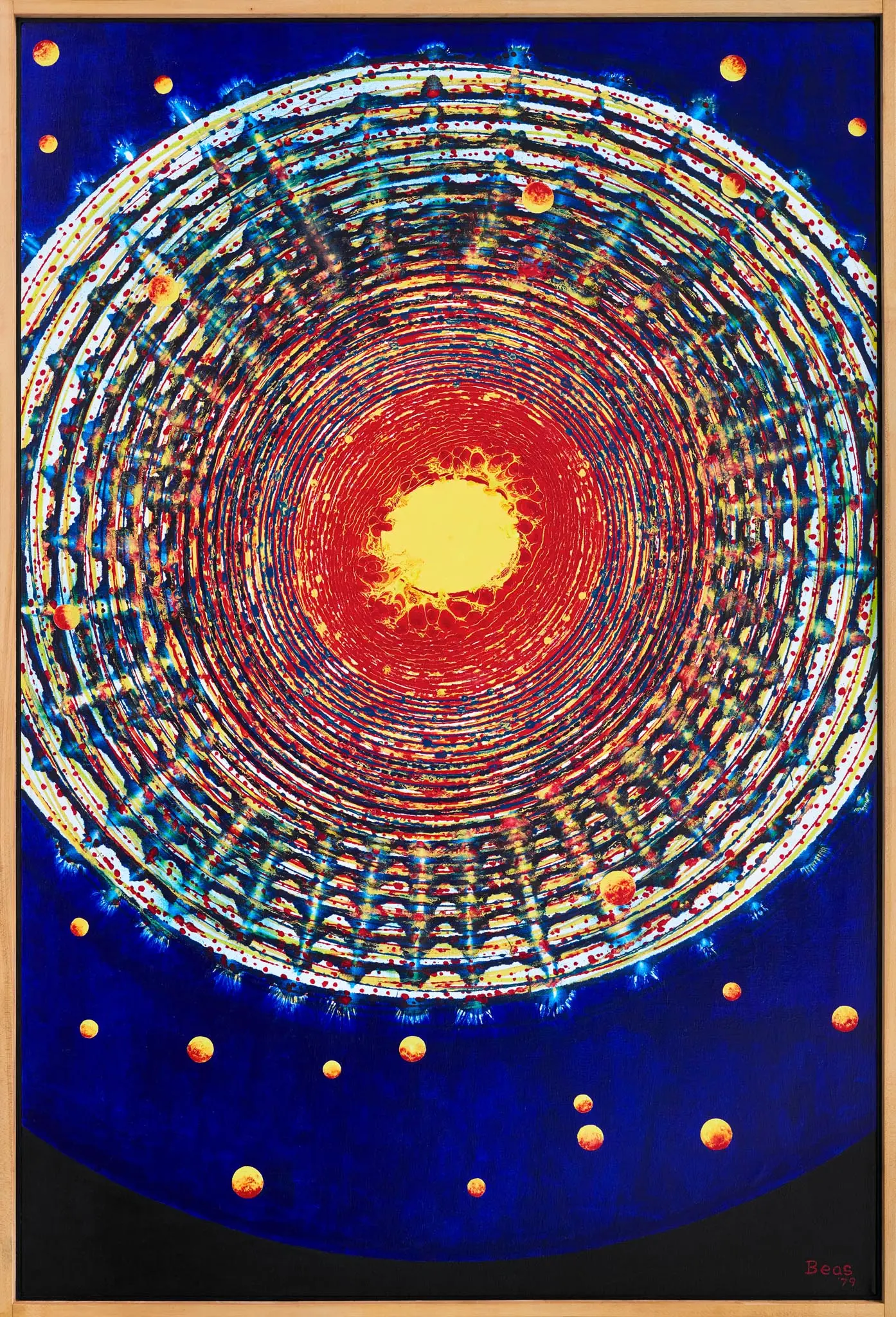
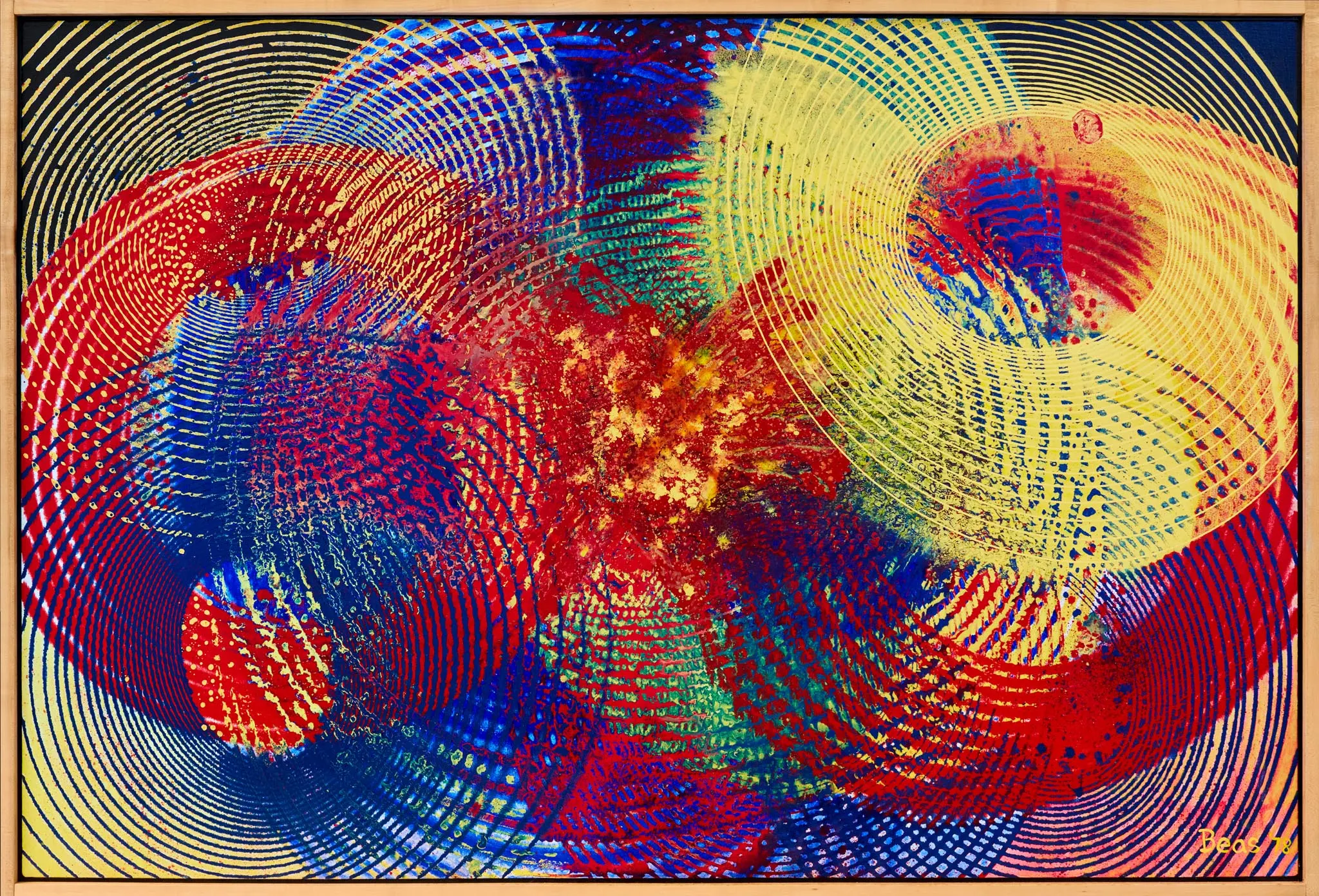
Series II · 2017–2021
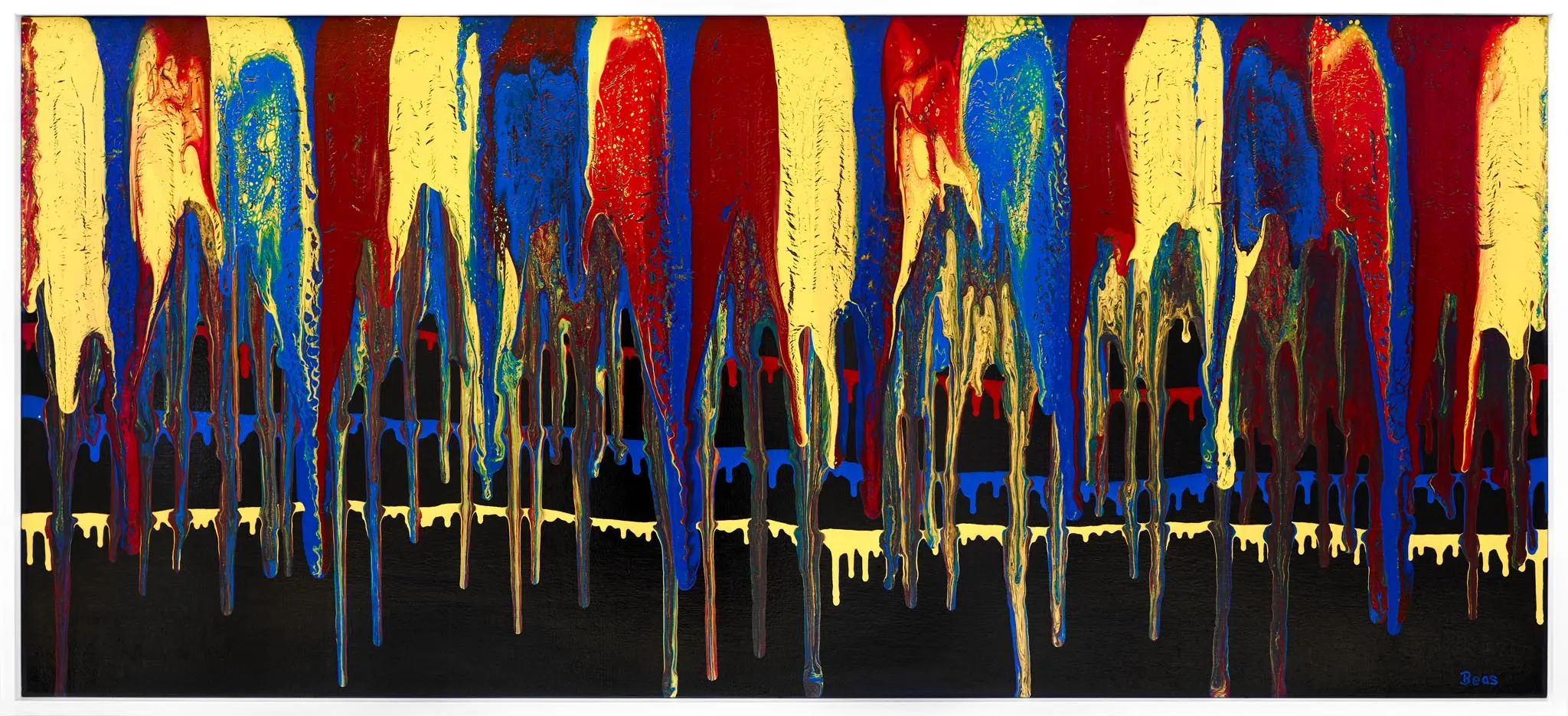
Theory of Everything — twenty-four paintings.
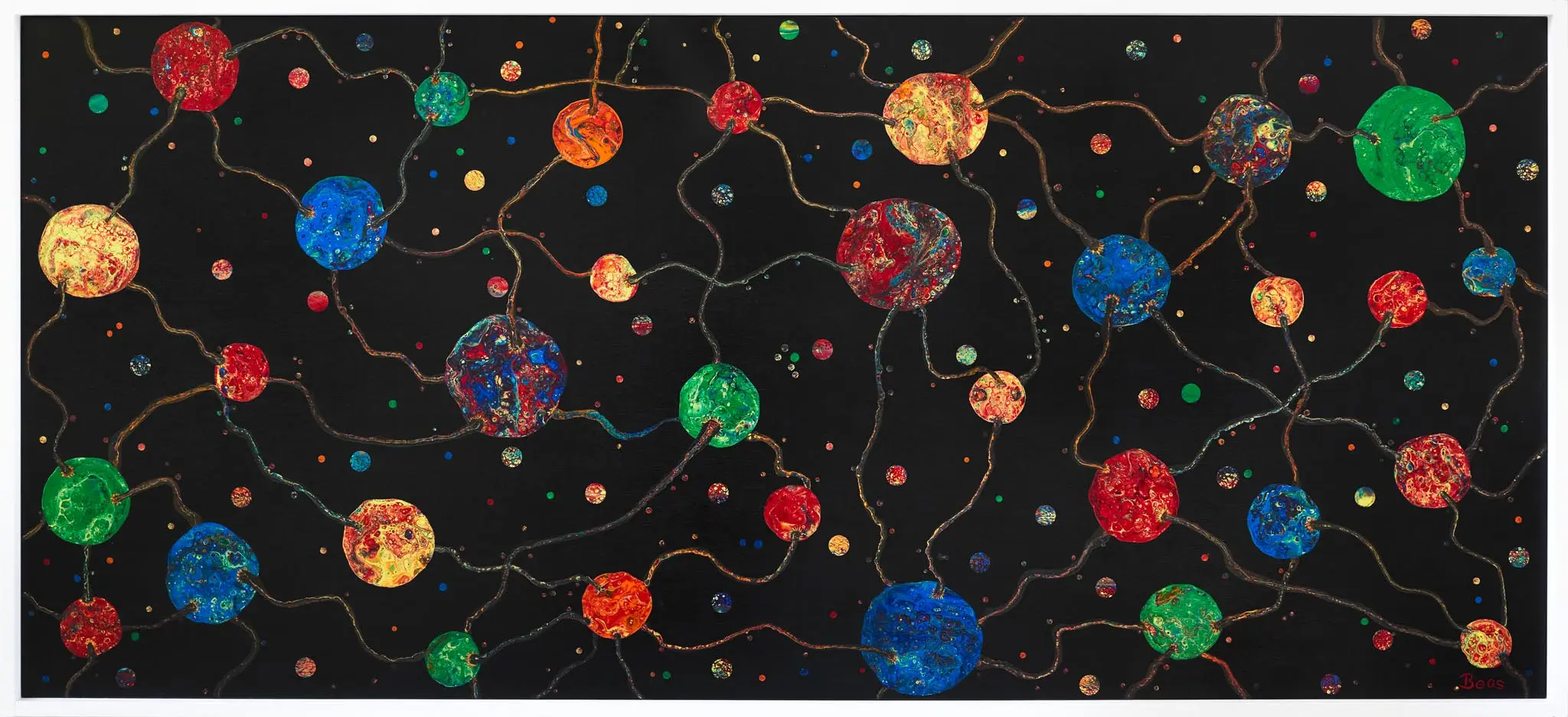
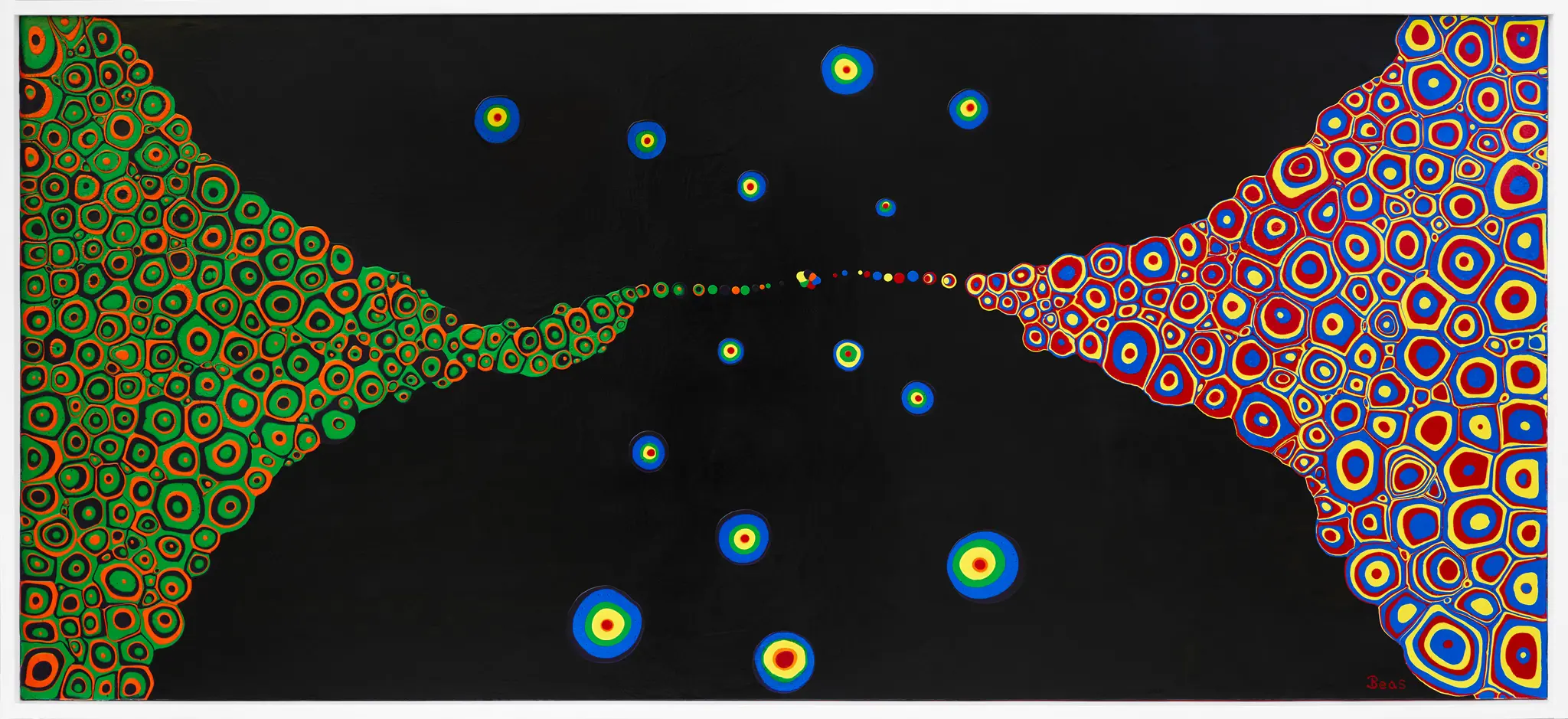
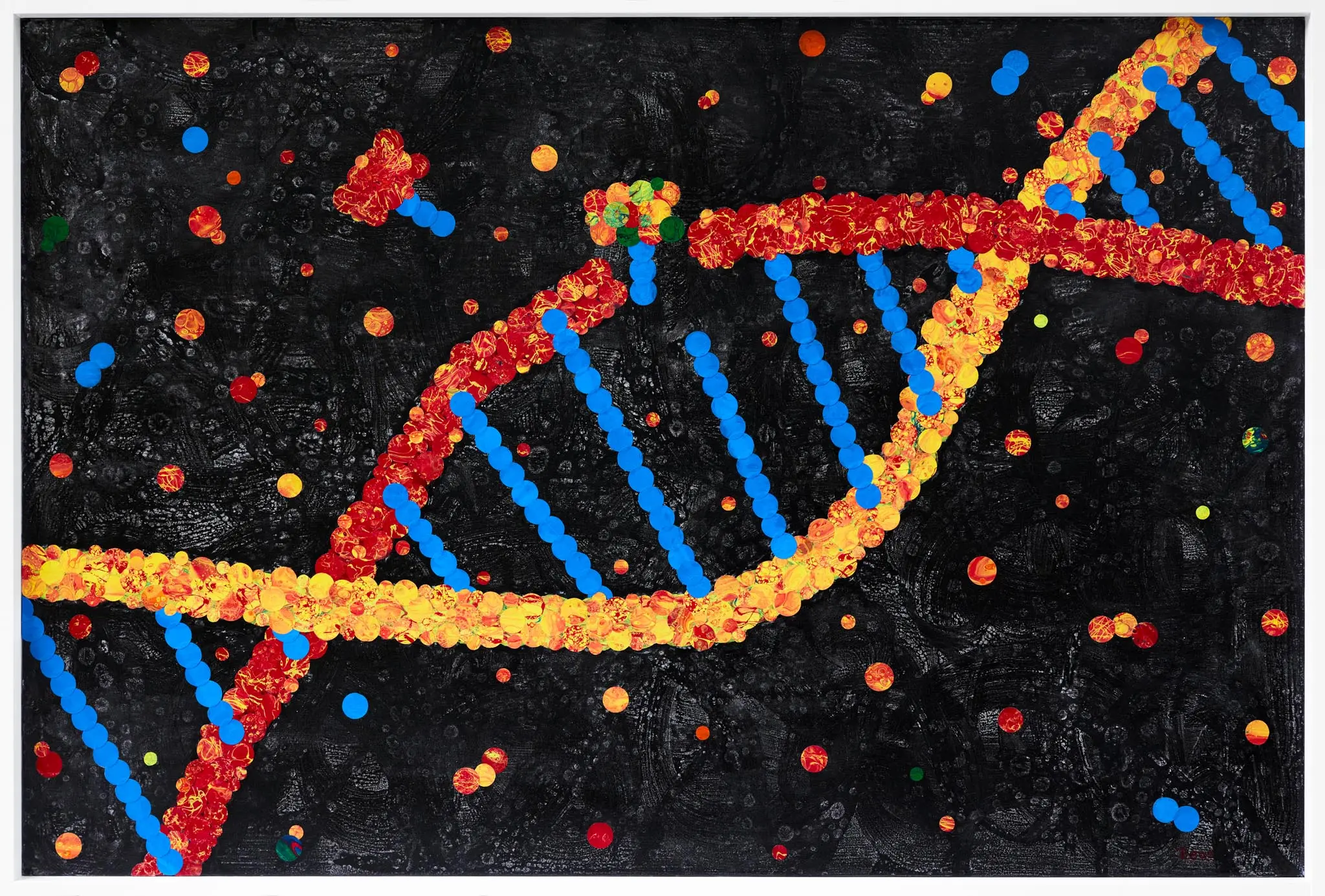
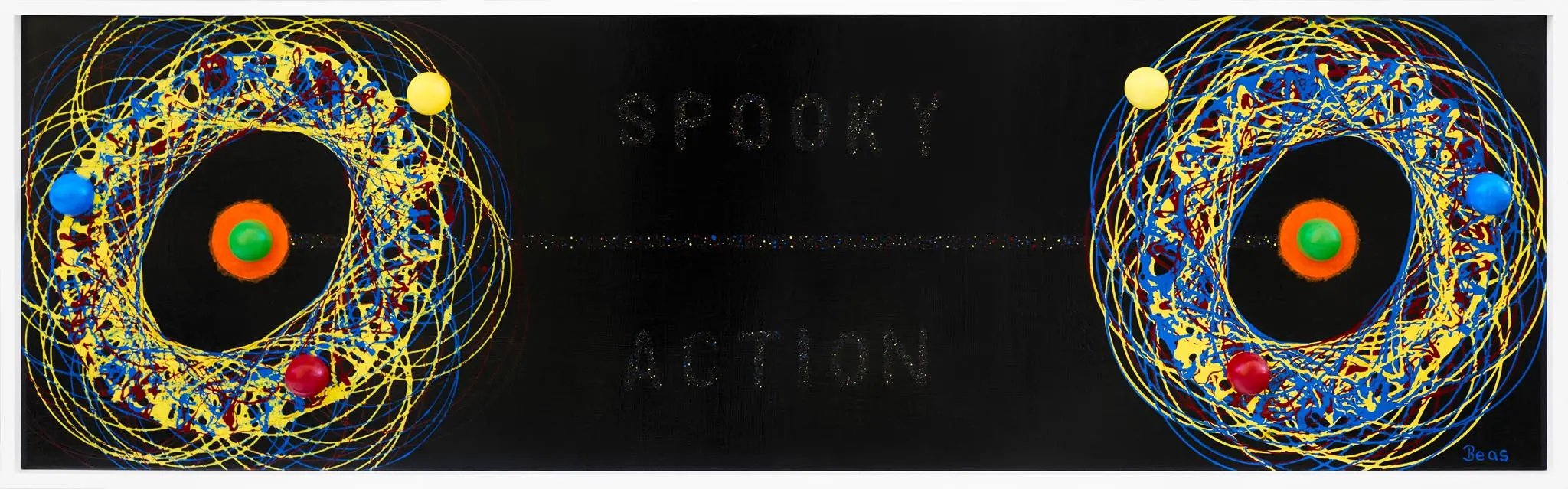
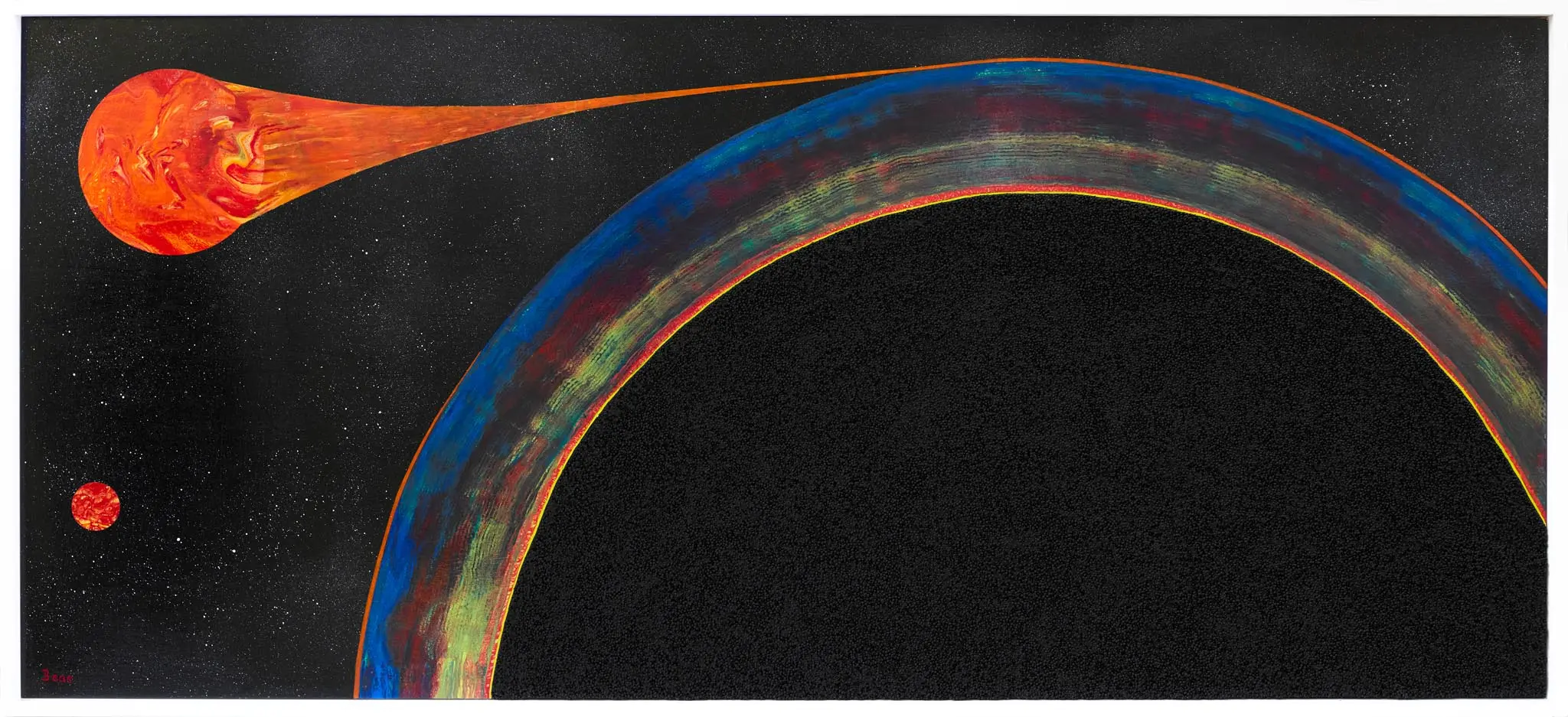
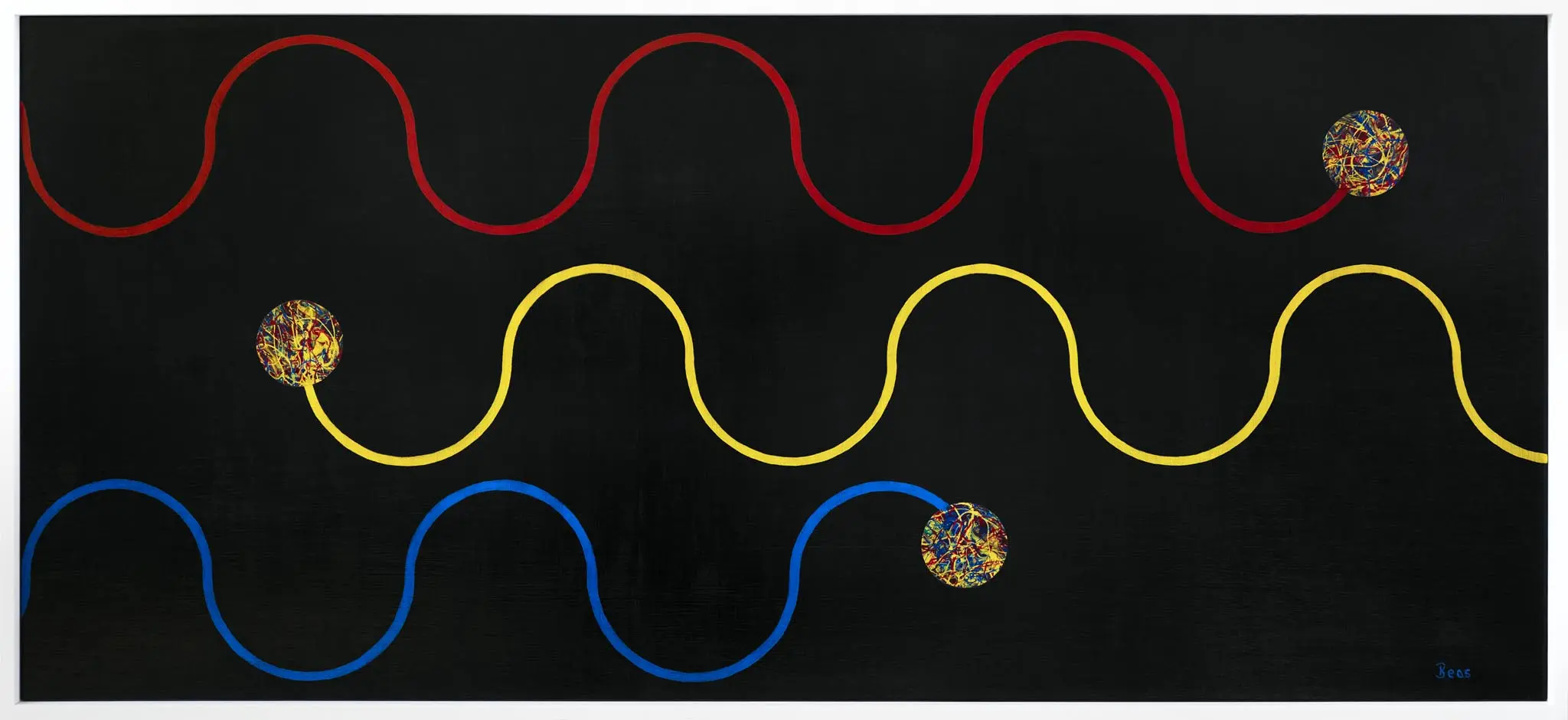
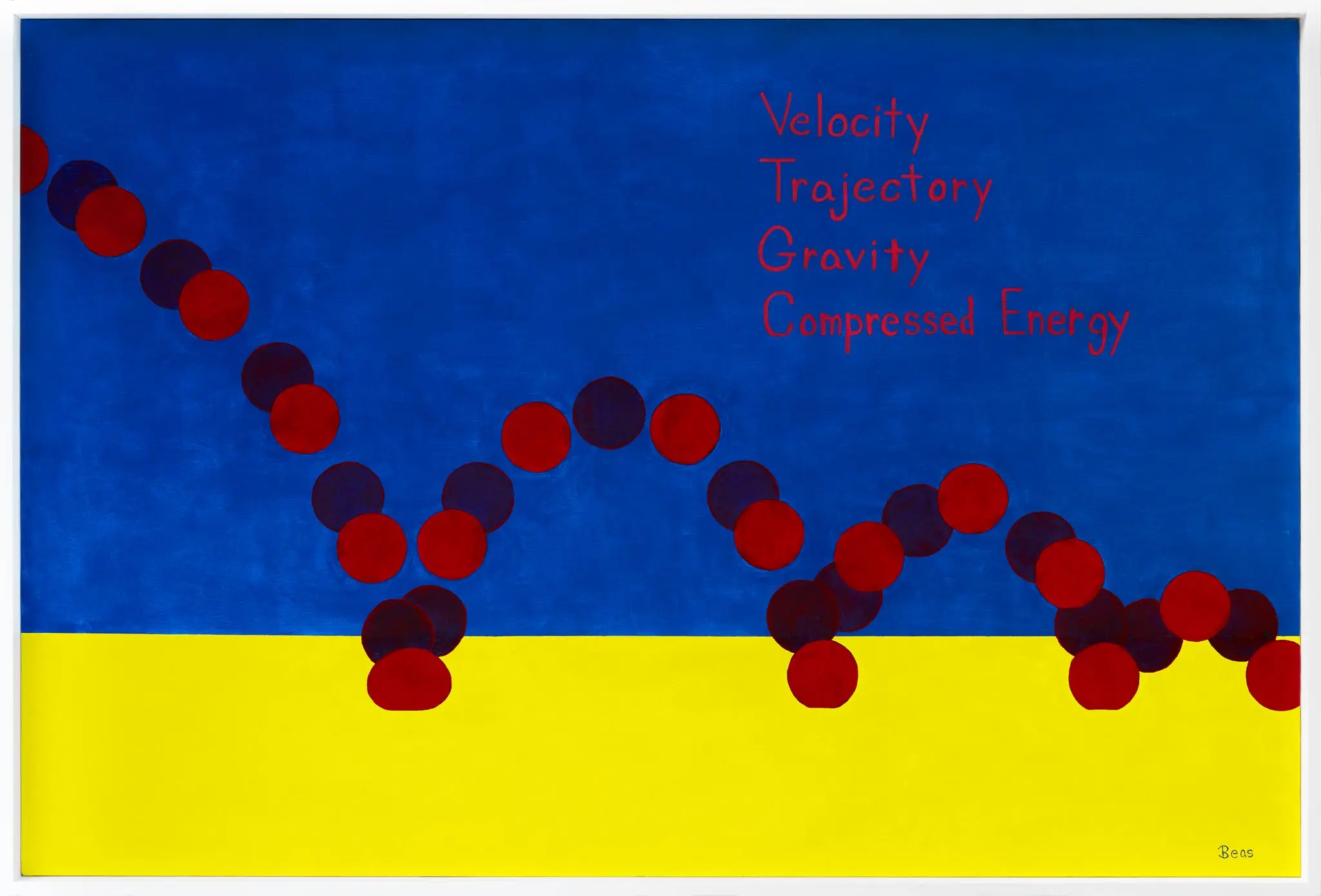
Across these 24 paintings, each canvas takes one idea from physics or cosmology and paints it — entanglement in Spooky Action at a Distance, wave-particle duality in Everything is a Wave or Maybe a Particle, Einstein’s curved spacetime in Gravity, the Higgs hunt in Smashing, the black-hole boundary in Event Horizon. Rendered in dense, vivid color.
Some of these paintings say more than they first appear to. We leave the discoveries to the viewer.
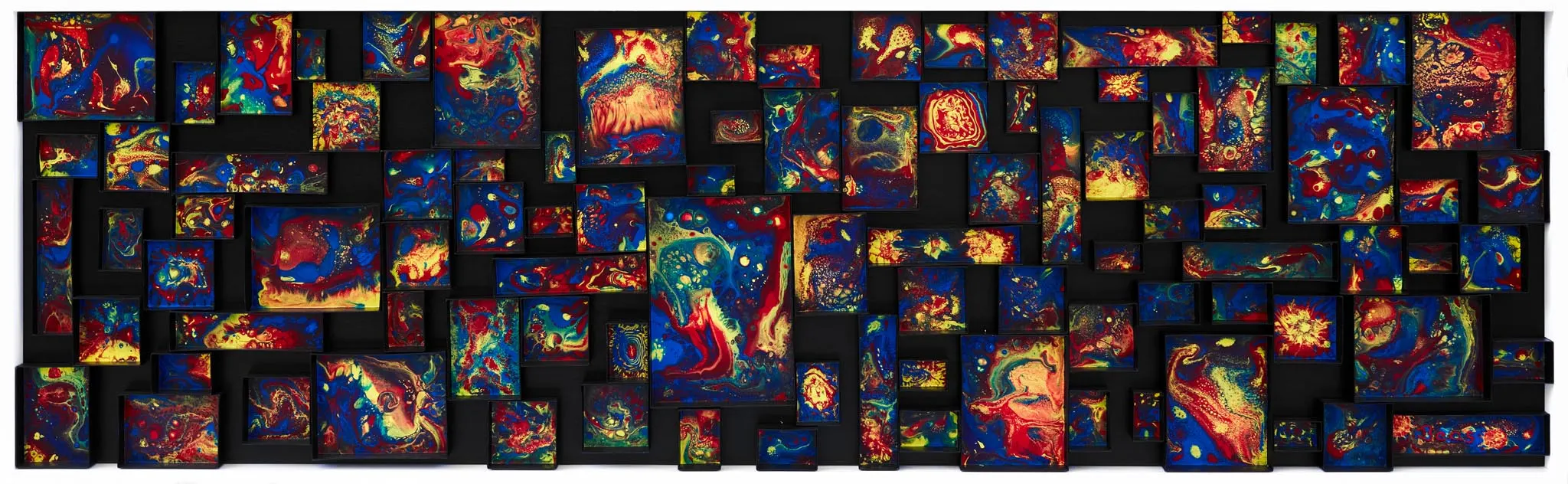
The Arc
One palette. Fifty years.
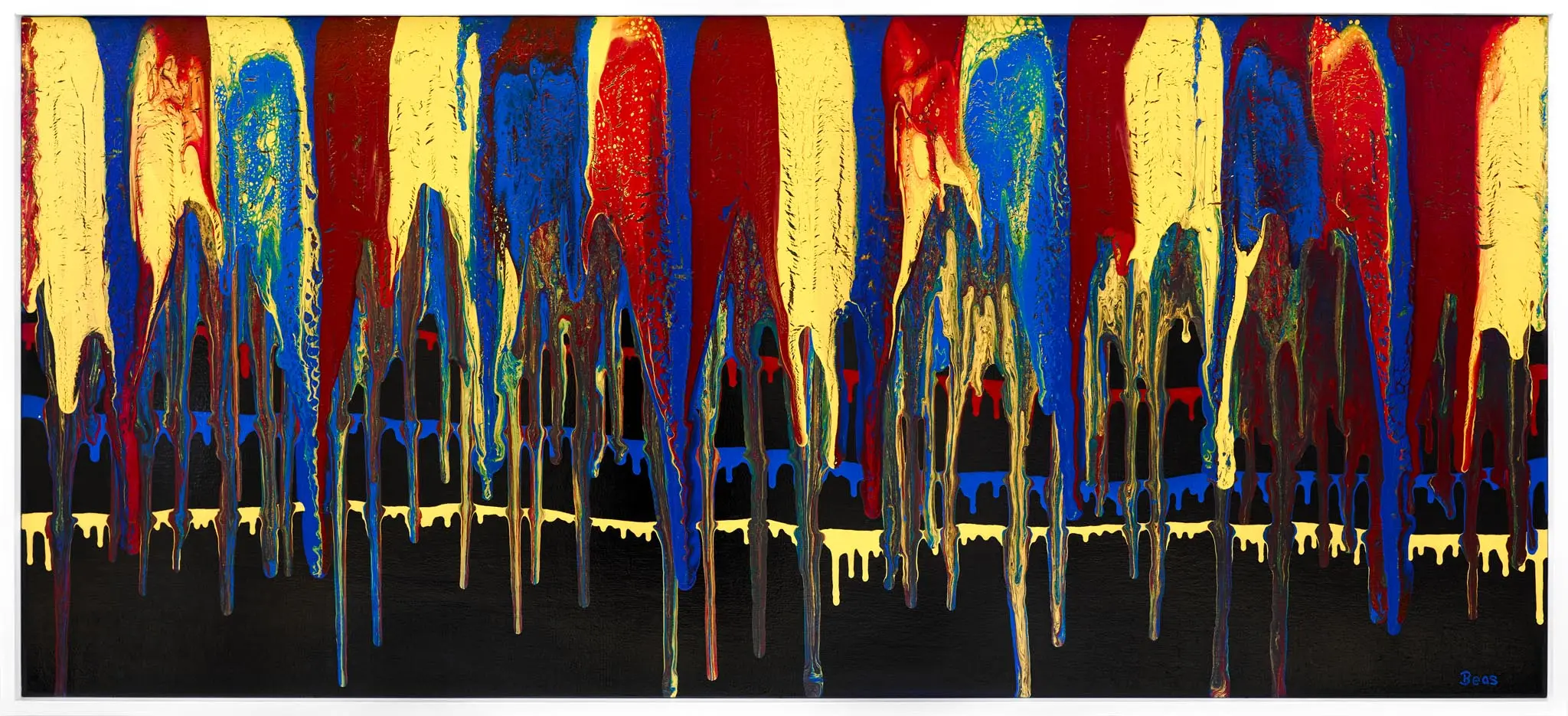
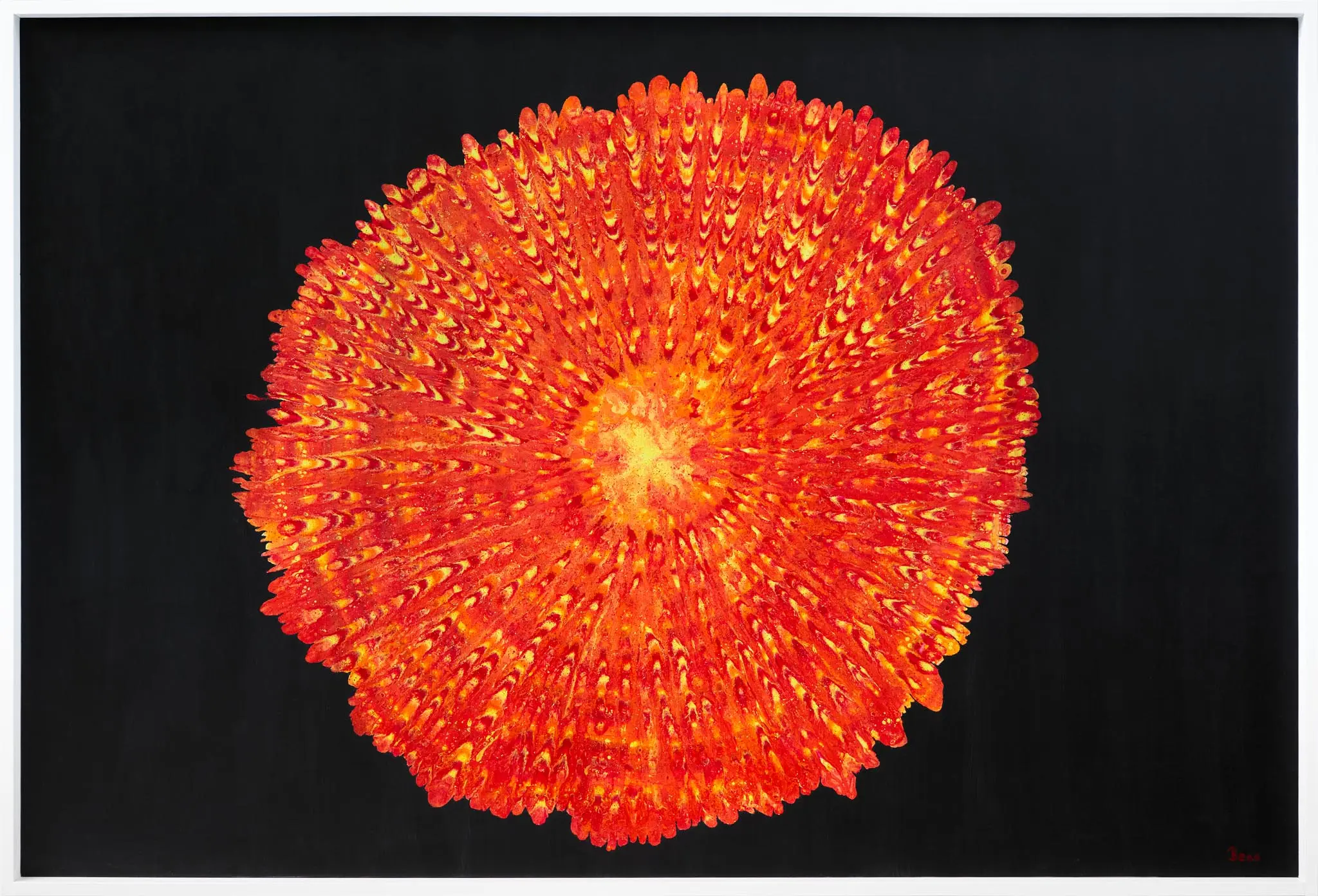
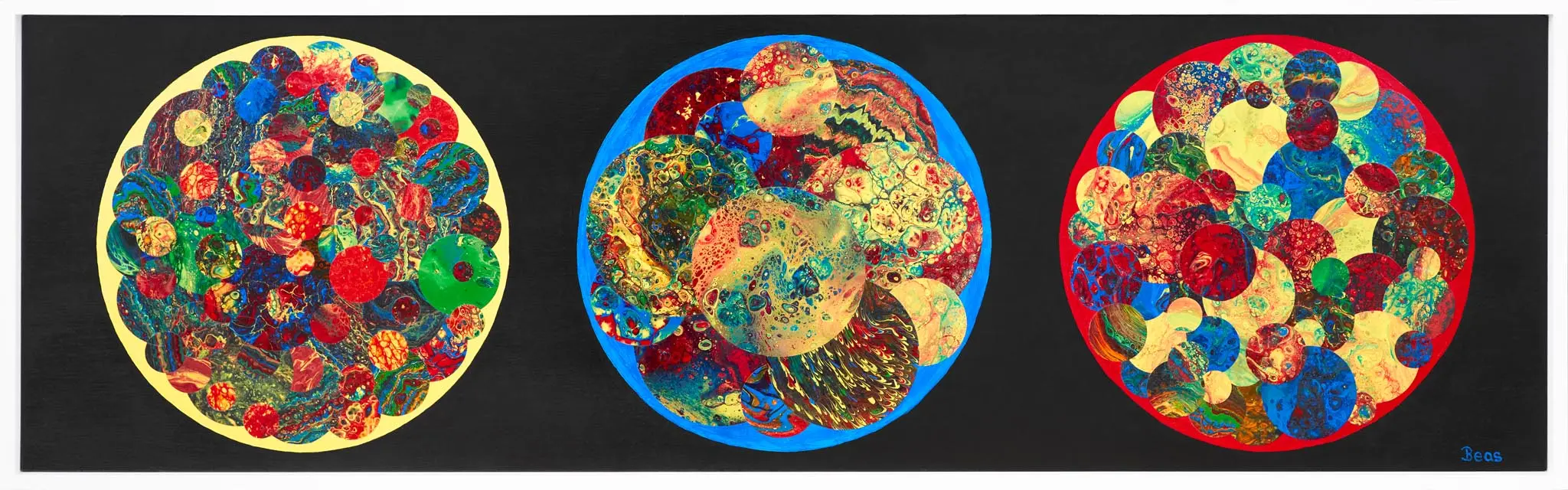
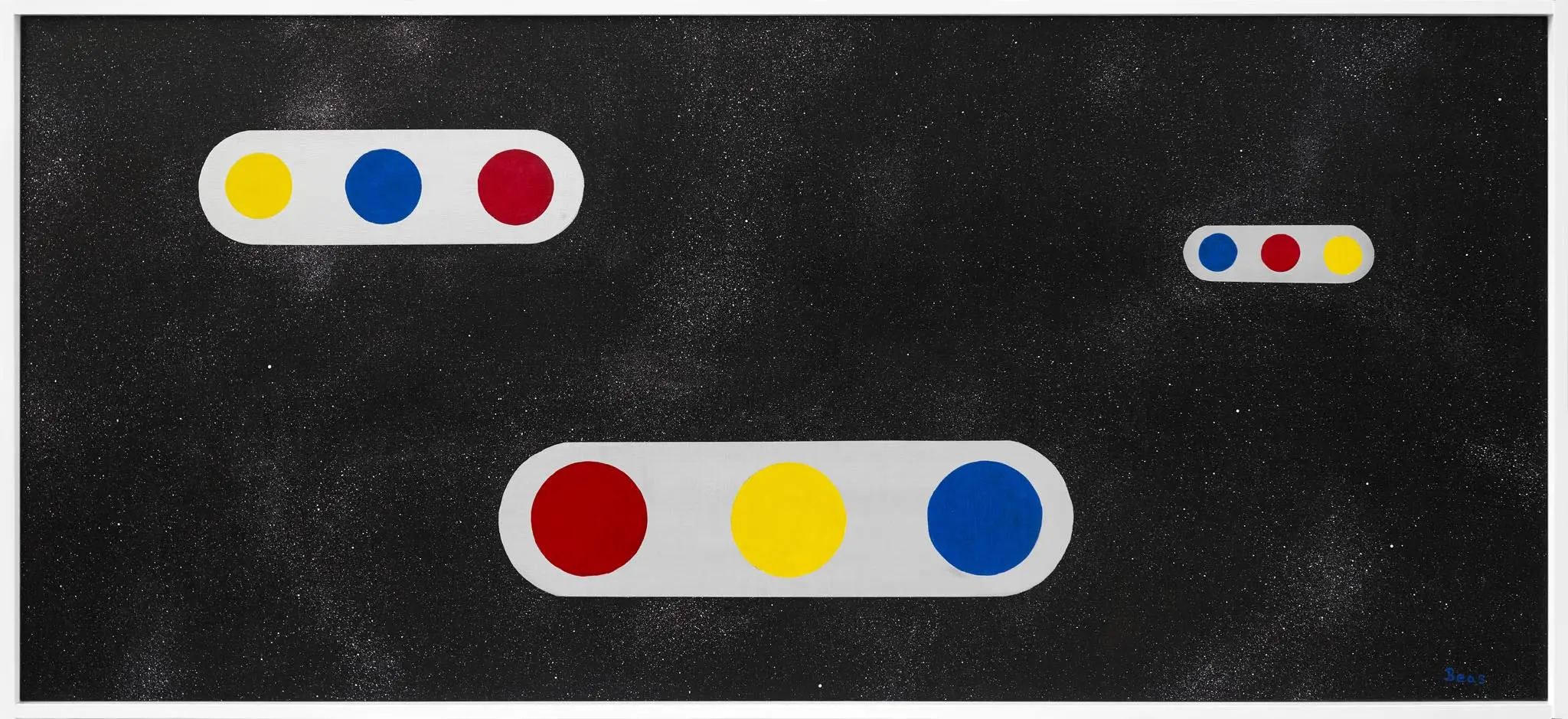
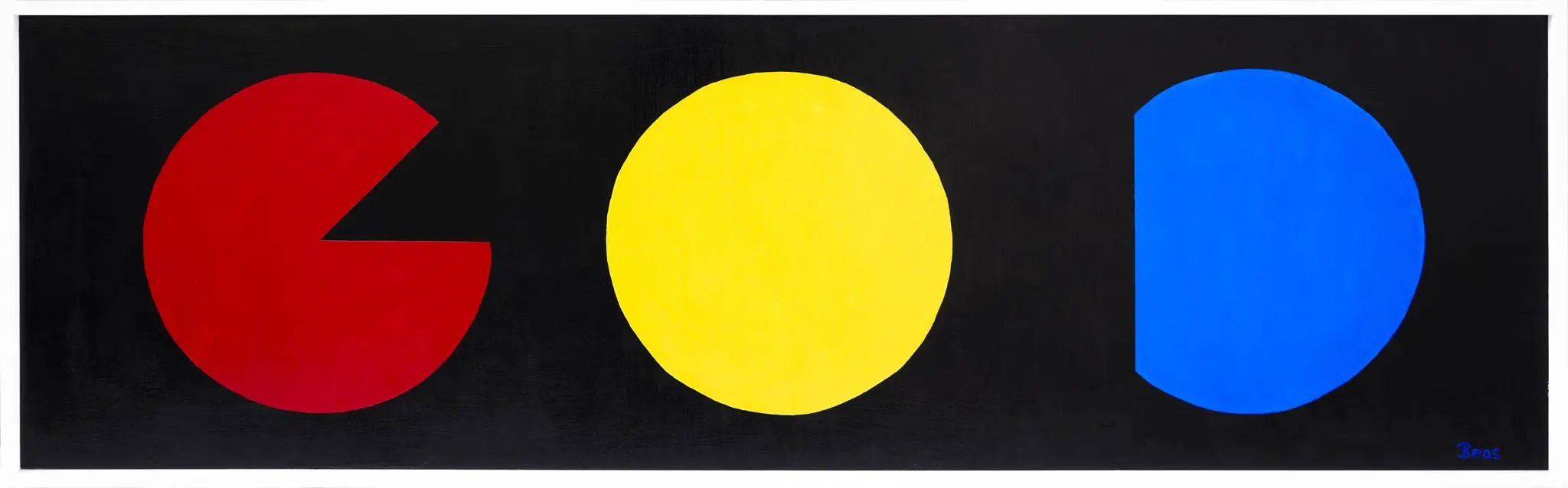
Red, yellow, blue, black, white — almost nothing else, across half a century. Properly mixed, the primaries make every color but black and white. He used them as symbols of the elements and forces involved in the creation of the universe — and because every other color derives from these three, they were, to him, its building blocks.
Thirty-eight years separate the two series. The young painter answered the question with process — machines, chemistry, collision. The old painter answered it again by painting the ideas themselves, one to a canvas. Same inquiry. The collection holds both answers.